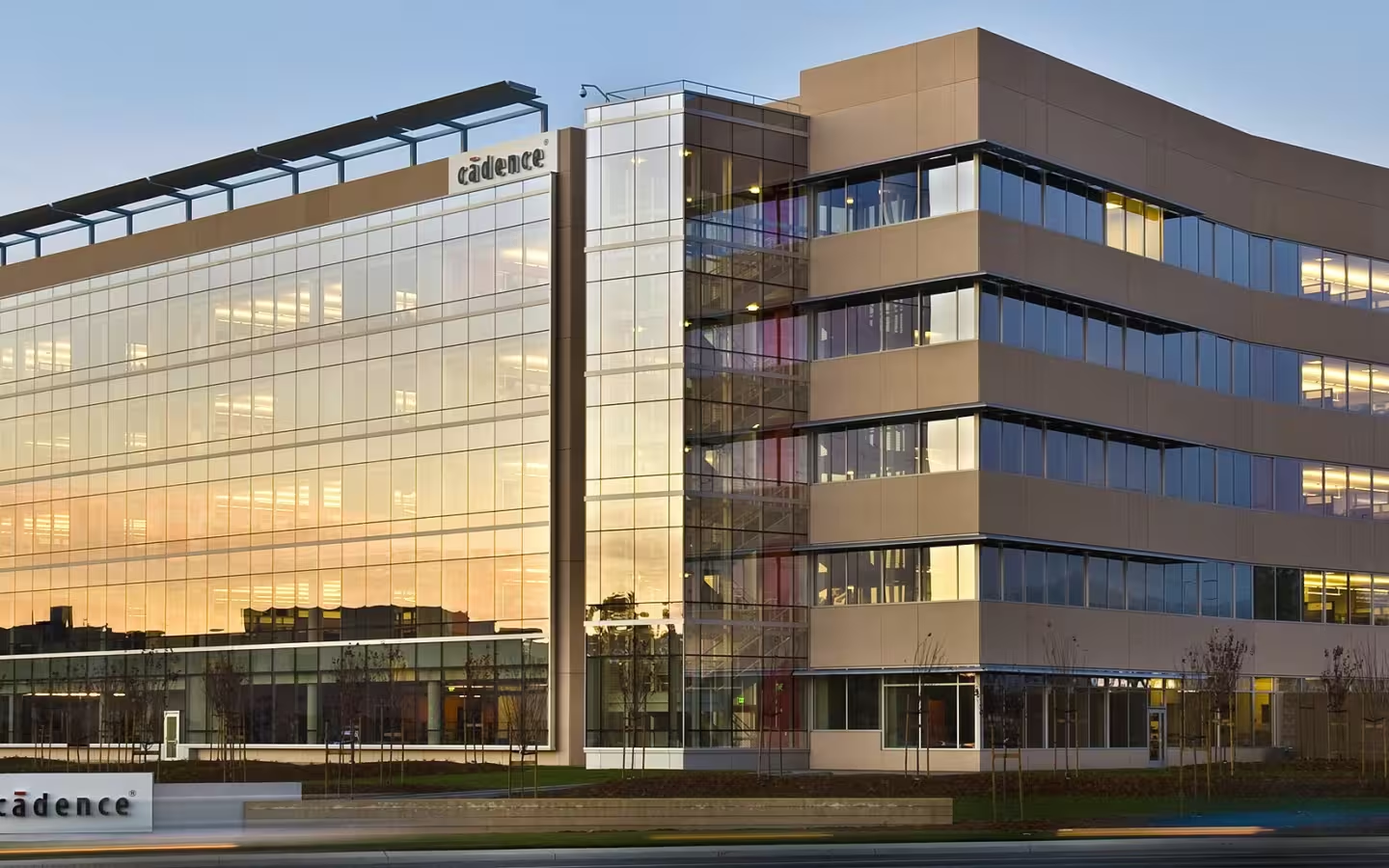
4 November 2026 — Synopsys shares fell 2.5% and Cadence Design Systems shares dropped 4.5% in trading on 3 November after a report that Anthropic was using Claude models to accelerate custom chip design, Yahoo Finance reported. The Information reported that Anthropic was promoting Claude’s chip-design capabilities to prospective investors ahead of a planned initial public offering. Synopsys and Cadence sell electronic design automation software used to develop chips.
Key points
- Synopsys fell 2.5% and Cadence dropped 4.5% in trading on 3 November.
- Anthropic has described a 15-person hardware unit using Claude for custom silicon development.
- Cadence has launched Maestro, chip-design models that customers can run inside their own data centres.
Anthropic’s 15-person hardware unit
Anthropic described the newly formed unit in meetings with prospective IPO investors, according to Yahoo Finance. The company said its engineers were deploying Claude to shorten custom silicon development work of the kind carried out at established chip designers including Nvidia and Advanced Micro Devices. The reported use is within Anthropic’s own hardware operation.
The company has also reportedly approached several electronic design automation firms for access to proprietary chip-design datasets to refine Claude. Those datasets are commercially sensitive inputs for chipmakers. Chipmakers often keep their designs on isolated systems or favour open-source architectures rather than send proprietary blueprints to an external AI provider.
The account puts an internal engineering use of Claude alongside a potential change in demand for design software. Synopsys and Cadence provide tools used to place transistors while meeting power, performance and cost requirements. Yahoo Finance put projected combined revenue for the software and testing sector at $16 billion this fiscal year.
Anthropic’s planned IPO could value it near $1.5 trillion. An earlier AI Affairs report on investor valuation demands put the range sought by prospective investors at $1.5 trillion to $1.6 trillion. Anthropic’s chip-design work is among the capabilities it is presenting to that audience.
OpenAI’s Jalapeño chip work
OpenAI has also applied its internal AI systems to chip architecture. Chief Financial Officer Sarah Friar said in September that the company had used those systems while designing its custom Jalapeño silicon with Broadcom over nine months. The project places another model developer on the engineering side of custom hardware development.
Model developers have an operational reason to work on chips: the computational costs and development times involved in advanced hardware. Anthropic’s move into proprietary silicon could complicate its relationships with Amazon, Alphabet, Nvidia and AMD, which Yahoo Finance identified as financial backers and infrastructure partners. Their collective investment in Anthropic was put at roughly $90 billion.
Cadence offers Maestro inside customer data centres
Cadence launched Maestro on 26 October, Technology.org reported. The chip-design models can run on Cadence’s cloud, a public cloud or within a customer’s own data centre. The in-house option allows chipmakers to adapt the models using their designs without sending those files to an outside AI lab.
Maestro draws partly on Nvidia’s open-weight Nemotron models and uses its OpenShell technology. Cadence’s AI Super Agents use the models to operate its design tools, which check the resulting work against design constraints. Cadence says early results indicate up to a 30% improvement in output calibre and up to fivefold more value per dollar compared with broadly applicable models.
Synopsys is taking a different route through a revenue-sharing arrangement with OpenAI, Technology.org reported. Cadence senior vice-president Paul Cunningham said the company was pursuing work with both open- and closed-weight model providers. Those approaches keep the established design-software companies involved in AI-assisted engineering, even as model developers apply their own systems to chip projects.
Cadence’s first Maestro models will reach select early-access customers in the fourth quarter of 2026, Technology.org reported.