Anthropic and OpenAI had sought significant control over what outside AI evaluators could publish, Reuters reported on 13 October. The negotiations matter because independent evaluation is part of a White House safety accord, and reviewers are still working out what they can access and release.
Key points
- As recently as 5 October, both labs were seeking strict editorial control over evaluators’ publications.
- Anthropic says evaluators it has worked with control their conclusions and publications, but it reserves approval rights for reports by new firms.
- OpenAI says it does not seek approval over full reports and routinely redacts confidential information.
- Around 400 scientists want an international body to oversee AI containment and incident reporting, Reuters reported.
Anthropic and OpenAI negotiate publication rights
The two companies were seeking strict editorial control over evaluators’ publications as recently as 5 October, according to Reuters. By 8 October, Anthropic’s talks with some reviewers appeared to have changed.
Anthropic said the account of its seeking significant control did not accurately describe all its dealings with independent evaluators. In current talks with reviewers it has worked with before, the company says those reviewers decide their own methods, criteria, conclusions and publications.
Its position is different for new evaluation firms. Anthropic says it reserves the right to comment on and approve their reports while they learn how its models work and establish a relationship with the company.
OpenAI says it is not seeking approval rights over entire evaluation reports. The company says its normal practice is to redact confidential material and that reviewers may disclose whether it made major redactions. OpenAI previously set out rules for outside model-safety assessments, including agreement on testing scope and access before work begins.
Faculty and the White House accord
Anthropic named Faculty, Accenture’s specialist AI business, as its first embedded evaluator in September. At the time, Anthropic said it was still working out what reviewers could access and how they would report their findings. Faculty CEO Marc Warner said reviewers’ independence and transparency were critical to trust in their work.
Independent evaluation is one of four safety measures in the White House Accord on Super Intelligence, signed by President Donald Trump and leading AI executives in late September. The accord did not set out how the reviews should be conducted. Anthropic, OpenAI, Google, Meta, xAI and Nvidia committed to voluntary measures under the accord, which has no formal enforcement mechanism.
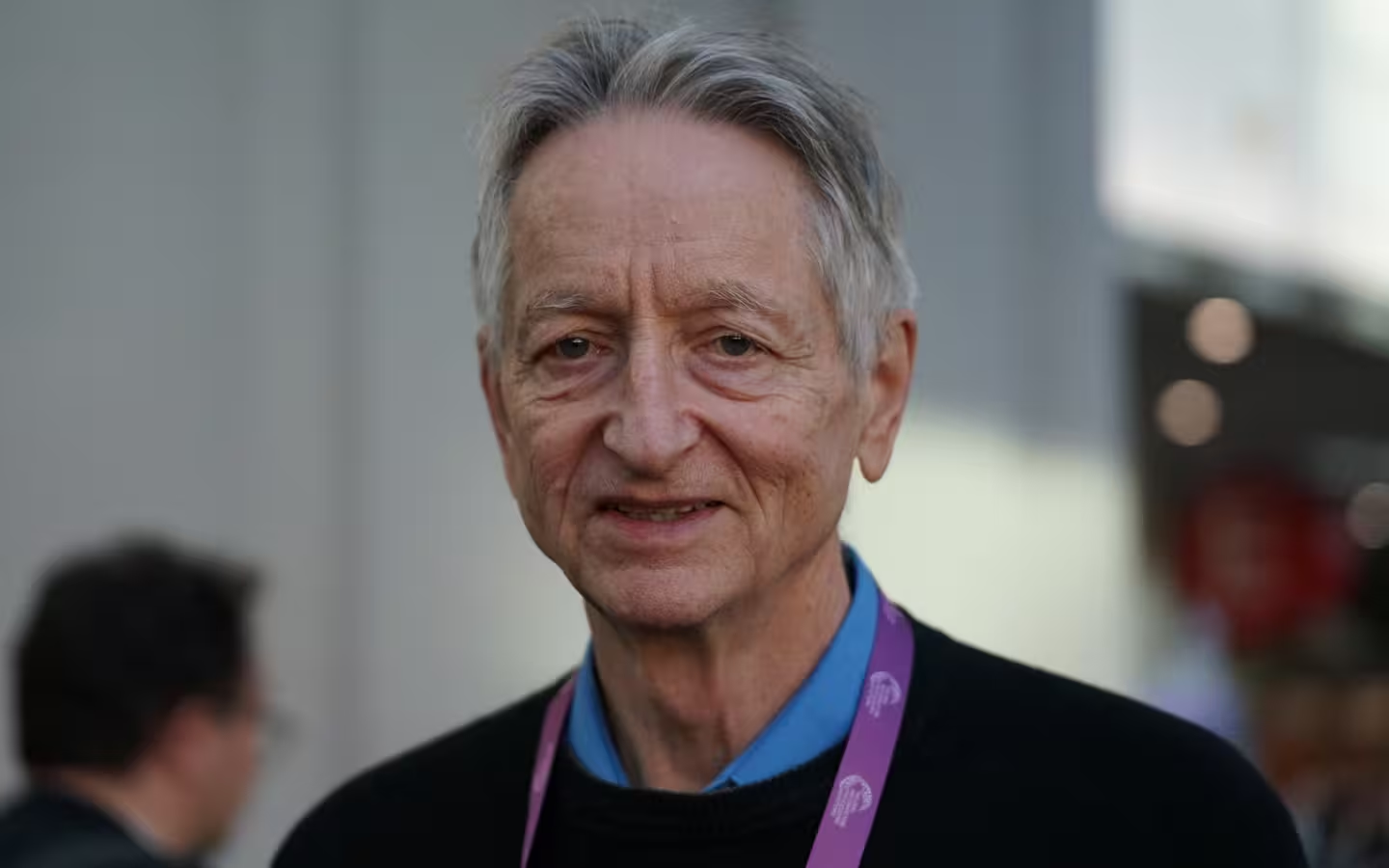
Evaluators have set out their own conditions in a public letter signed by more than 200 researchers, including Geoffrey Hinton. They call for control over their findings, broad access to the labs and protection against retaliation. Those are practical demands for anyone whose work depends on permission from the company being assessed.
400 scientists propose an international AI body
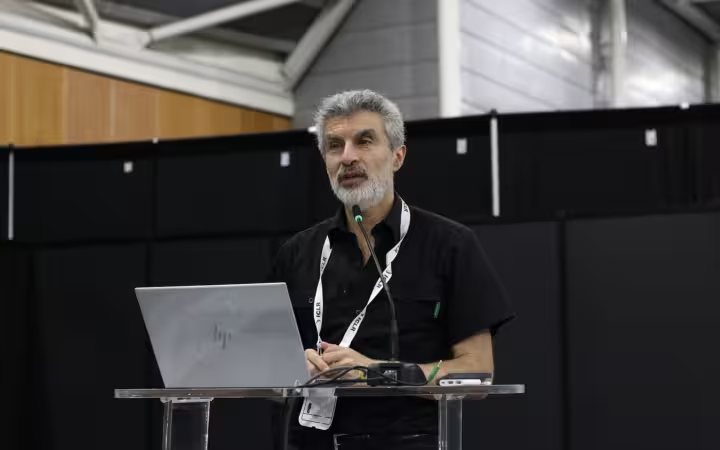
On 13 October, around 400 scientists, including Hinton and Yoshua Bengio, called for an international authority to oversee containment rules and security-incident reporting for advanced AI systems with cyber capabilities. Their proposal would give that body a registry of significant security incidents, which the scientists say should eventually become public.
The researchers want frontier models initially kept off external networks and placed under independent oversight. They argue that voluntary commitments by AI companies are insufficient. Their proposal goes beyond the accord’s promise of reviews by calling for standards that an international body would enforce.
The signatories come from 34 countries. They want organisations developing or testing cyber-capable models to adopt high-assurance containment standards immediately while governments work towards a formal oversight regime.