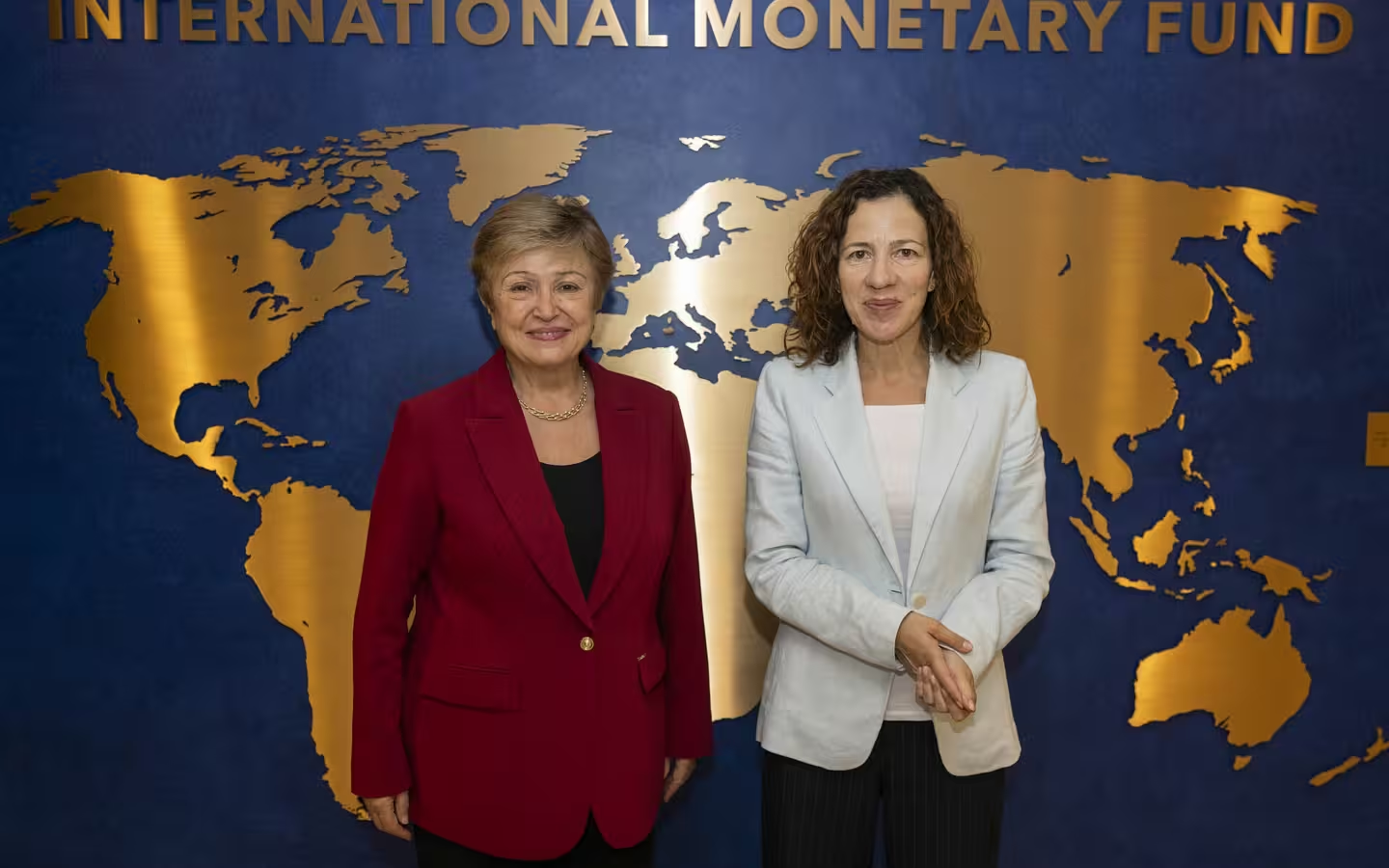
IMF Managing Director Kristalina Georgieva said AI is expected to affect approximately 40 per cent of jobs worldwide at the IMF and World Bank’s annual meetings in Bangkok, AzerNews reported on Monday 12 October. She urged governments to reassess education and warned that changes to employment could affect tax revenues.
Key points
- Georgieva said AI could affect about 40 per cent of jobs globally.
- She put exposure at an estimated 60 per cent of jobs in advanced economies.
- She called for education reform and attention to the effect of labour-market changes on tax revenues.
- She also estimated that AI adoption could add to growth in Asian economies.
AI exposure varies across economies
About 60 per cent of jobs in advanced economies could be affected, against about 40 per cent worldwide and about 26 per cent in low-income countries, Georgieva said, according to The Sun. She said AI could improve some roles while reducing or eliminating others. Exposure is a measure of potential change, not a forecast that all those jobs will disappear.
Georgieva said poorer countries’ lower exposure could reflect limited access to AI rather than better protection from its effects. AzerNews reported a different figure for a differently named group: Georgieva put the share of jobs expected to be affected in developing countries at approximately 23 per cent.
That distinction matters for governments deciding where to invest. Georgieva’s figures place greater direct labour-market exposure in advanced economies, while her warning about access points to a separate challenge for poorer ones.
Georgieva calls for education reform
Georgieva urged governments to review their education systems and prepare workers for changes driven by AI. She described a labour market in which the technology could assist people in some occupations and make other positions obsolete.
In the United States, jobs requiring AI skills were already commanding better pay while demand for routine and repetitive work was falling, Georgieva said, according to The Sun. She identified young people entering employment as particularly vulnerable because routine jobs have provided a way to gain experience and move into better roles.
She also urged policymakers to consider the effect on government revenue if economies rely increasingly on capital and technology rather than human labour. World Bank Group President Ajay Banga, who joined Georgieva on the panel, called for investment in education, healthcare and infrastructure to help young people find productive work.
Georgieva estimates AI growth gains in Asia
Georgieva estimated that AI adoption could add 0.5 to one percentage point to growth in advanced Asian economies and 0.2 to 0.8 percentage points in emerging Asian economies. She said countries would need reliable electricity, digital infrastructure, relevant skills and safeguards against AI misuse to benefit, The Sun reported.
Georgieva has also linked AI investment to global growth near 3 per cent and gains for Asia. Singapore President Tharman Shanmugaratnam, another participant in the panel, warned that growth might not produce enough jobs and called for closer cooperation between governments and businesses to help graduates enter work.


.jpg)