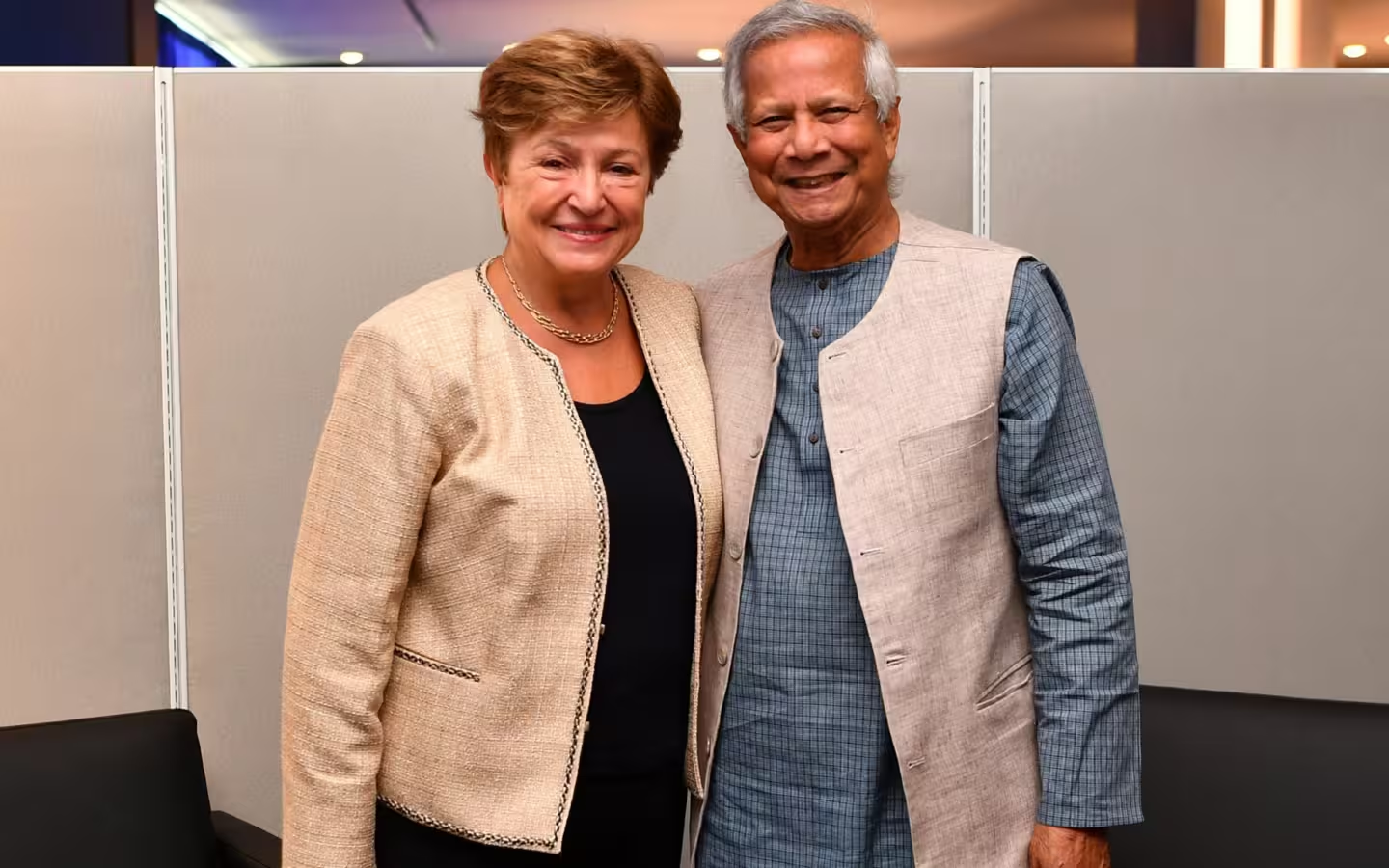
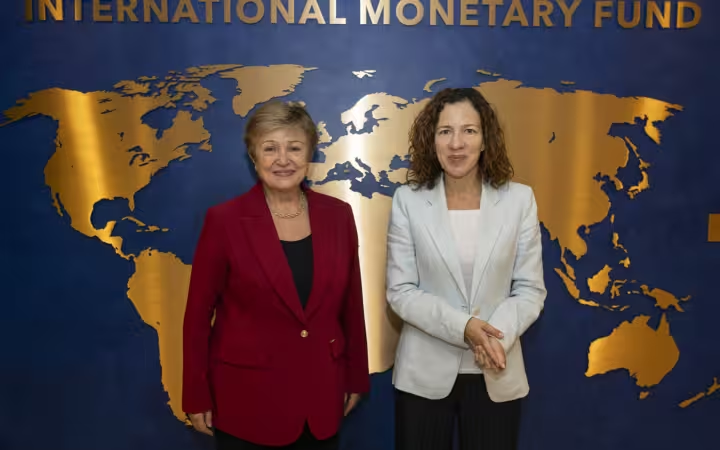
International Monetary Fund Managing Director Kristalina Georgieva warned on 7 October that disappointing profits from AI could trigger a major market shock, TASS reported. Her warning matters because it identifies how an earnings shortfall at AI companies could reach investors far beyond them: through hyperscaler borrowing and large global holdings of US shares.
Key points
- Georgieva warned that an AI earnings disappointment could become a far-reaching market shock.
- She identified hyperscaler leverage and growing global holdings of US equities as risks.
- IMF research suggests AI could add half a percentage point to annual world growth.
- Georgieva called regulation and supervision the first line of defence.
Georgieva points to hyperscaler leverage
Georgieva placed the danger between the current surge in AI construction and the arrival of its wider benefits. Invoking Amara’s Law, she said “we tend to overestimate a new technology in the short run and underestimate it in the long run”.
Corporate earnings are supporting share prices and creating wealth effects, she said. If earnings disappoint, borrowing by hyperscalers and the increasing amount of US equities held around the world could carry the shock much further. Georgieva called regulation and supervision the “first line of defense”.
She had raised the possibility of AI investment retreating in a 22 September interview with Semafor. There, Georgieva said cooling investor enthusiasm and money leaving major AI investments could put the economy in trouble. The Singapore warning goes further by naming the financial exposures that could transmit such a reversal.
IMF growth potential meets investment risk
Georgieva also set out the scale of the prospective gains. AI investment relative to GDP is likely to surpass spending on railways, electricity grids or telecommunications networks, while IMF research suggests the technology could add half a percentage point to annual world growth, Reuters reported.
Those potential gains sit alongside pressure on AI companies to deliver productivity improvements and earnings that justify their valuations, Georgieva said. The risk she described is concentrated in the period when investment has been made but its wider economic benefits have yet to arrive.
Singapore warning extends beyond markets
Speaking in Singapore ahead of the IMF and World Bank annual meetings in Bangkok, Georgieva called for regulatory safeguards against labour-market disruption, cyber and financial-stability risks, and advanced AI models escaping human control. Her concerns extend beyond the returns investors expect from the build-out.
She also described the global economy as caught between an energy supply shock from conflicts in the Middle East and demand fuelled by AI. Georgieva said IMF forecasts due at the Bangkok meetings would show the largest growth downgrades in war-ravaged economies.
.jpg)