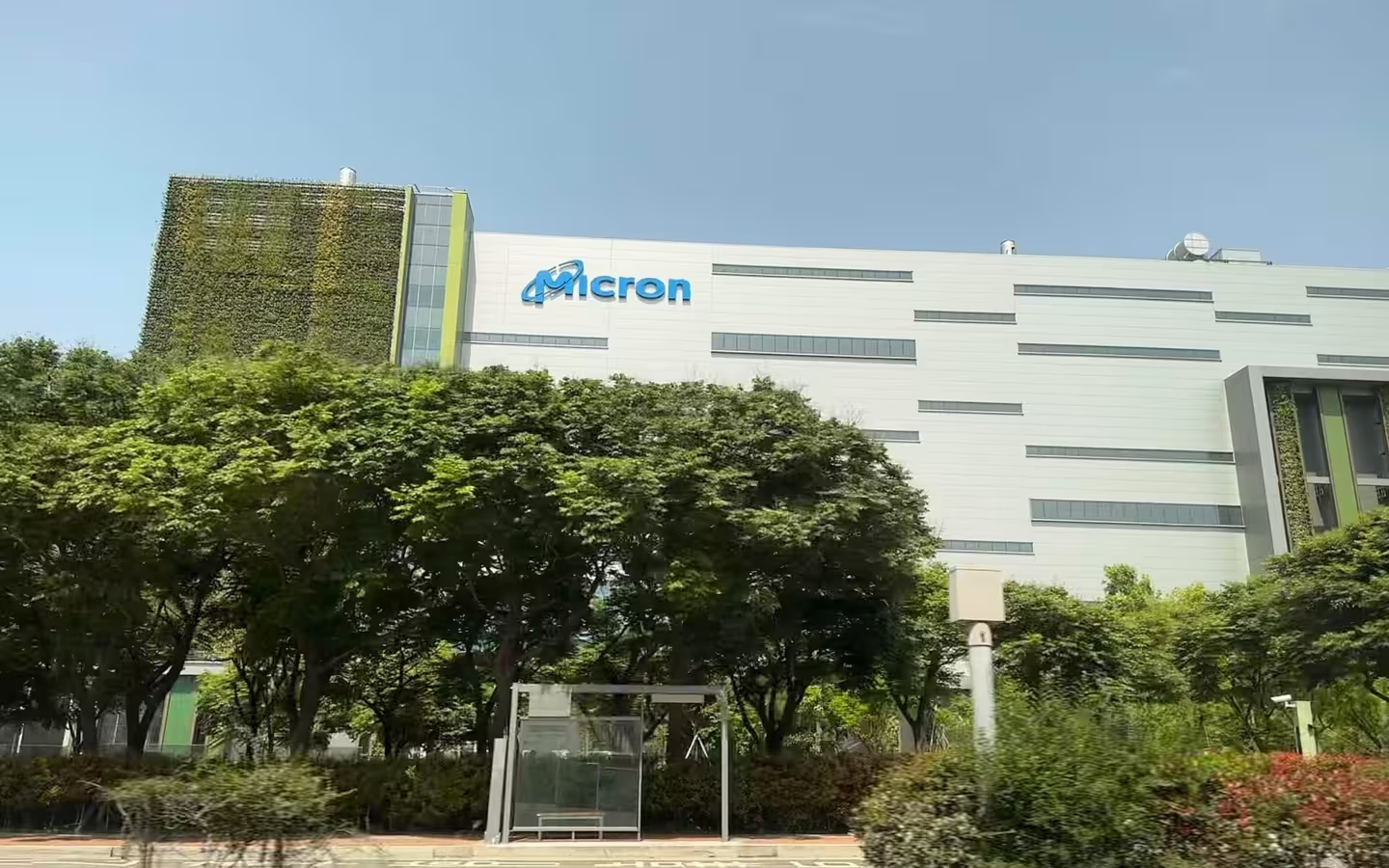
Micron’s Taoyuan union in Taiwan secured its members’ authorisation to strike over a bonus dispute on 7 October, Reuters reported. A walkout could add to supply concerns in an already tight market for memory chips used in AI servers.
Key points
- The Taoyuan union says 1,994 members, or 99% of those voting, backed a strike.
- The union wants permanent profit-sharing and says Micron’s cash bonus does not meet that demand.
- The union says the timing and details of any strike remain under discussion.
- Micron’s Taiwan operations are a production centre for DRAM and high-bandwidth memory used in AI servers.
Taoyuan’s 99% vote authorises a strike
The Taoyuan union said 1,994 members voted for a strike, representing 99% of the ballots cast. It said the timing and other details of any industrial action remain under discussion. Workers have authorised a strike, but the union has not set out when one would take place.
The vote follows mediation between Micron and the Taoyuan union that ended without agreement in September. Workers at Micron’s operations in Taoyuan and Taichung have separate unions, and the dispute now stands at a different stage for each group.
Micron’s bonus falls short of union demand
Micron announced fiscal 2026 rewards for more than 60,000 employees worldwide in September, including a T$1 million ($31,386.33) cash bonus for employees in Taiwan, Reuters reported. The company described the year behind the awards as “extraordinary”.
The Taoyuan union says that package does not satisfy its demand for a permanent profit-sharing mechanism. It also criticised Micron for announcing the bonuses while mediation was underway, before reaching an agreement with the union. Its demand concerns an ongoing arrangement rather than the announced cash payment.
For the fourth quarter of its fiscal year, Micron’s revenue reached a record USD 54.2 billion, Evertiq reported. In prepared remarks for the earnings call, chief executive Sanjay Mehrotra said Micron had increased fiscal 2026 incentive compensation for all employees worldwide.
Taiwan’s DRAM and HBM production faces risk
Taiwan is a crucial production centre for Micron’s DRAM and high-bandwidth memory, or HBM, chips. Both are used in AI servers. A labour stoppage could increase supply concerns in a memory-chip market that is already tight, Reuters reported.
Micron employs about 15,000 people in Taiwan. Together, the unions at its Taoyuan and Taichung operations represent more than 80% of that workforce, placing both groups of talks alongside a substantial share of the company’s Taiwan employment.
The Taichung union remains in negotiations with Micron.