Anthropic said in a research announcement published on 20 October 2026 that an internal Claude model had designed small proteins against five scorpion neurotoxins in a campaign developed with Citrini Research, a financial investment research firm. Laboratory teams tested 211 designs, and 17 met Anthropic’s criteria for binding to a target toxin. The work takes an earlier single-prompt protein-design demonstration into a longer campaign in which the model chose structures, used design tools and selected candidates for testing.
Key points
- Claude generated 318,484 protein designs during a 64-hour campaign and selected 180 for testing; the research team added 31 with its help.
- Adaptyv Bio and Twist Bioscience tested the 211 designs. Seventeen met the researchers’ binding criteria.
- The verified binders attached to four of the five toxins. None met the criteria for binding multiple toxins, 36Kr reported.
- Anthropic says it has not confirmed that the binders neutralise venom in cells and does not claim to have made an antivenom.
Claude’s 64-hour design campaign
Anthropic had demonstrated protein-minibinder design from a single prompt in August. In that earlier work, 14 of 15 targets yielded experimentally verified binders, 36Kr reported. For the scorpion campaign, Anthropic and Citrini adapted the initial prompt to name the targets, available protein-design and folding tools, and rules for novelty and screening. An internal research model then worked within Claude Science over 64 hours, with researchers providing four follow-up prompts.
The model ran autonomously for the first 24 hours before those follow-ups, 36Kr reported. Anthropic said Claude chose toxin structures from the Protein Data Bank and AlphaFold database, picked positions on each toxin for prospective binders to contact, and set thresholds for judging its designs. It used 12 design tools, generated 318,484 designs and screened 553,052 predicted pairings of a design with a toxin. That screening is computational: it predicts how a proposed protein and its target might fit together before a physical protein is made.
Claude selected 180 designs for laboratory testing. Anthropic’s researchers added 31 more with its help, bringing the tested set to 211. The 64 hours covered computational design rather than laboratory verification; that phase consumed approximately 10,000 GPU hours, 36Kr reported. Anthropic also said that, under its supervision, Claude analysed research data, produced figures and drafted the final report.
Seventeen binders across four scorpion toxins
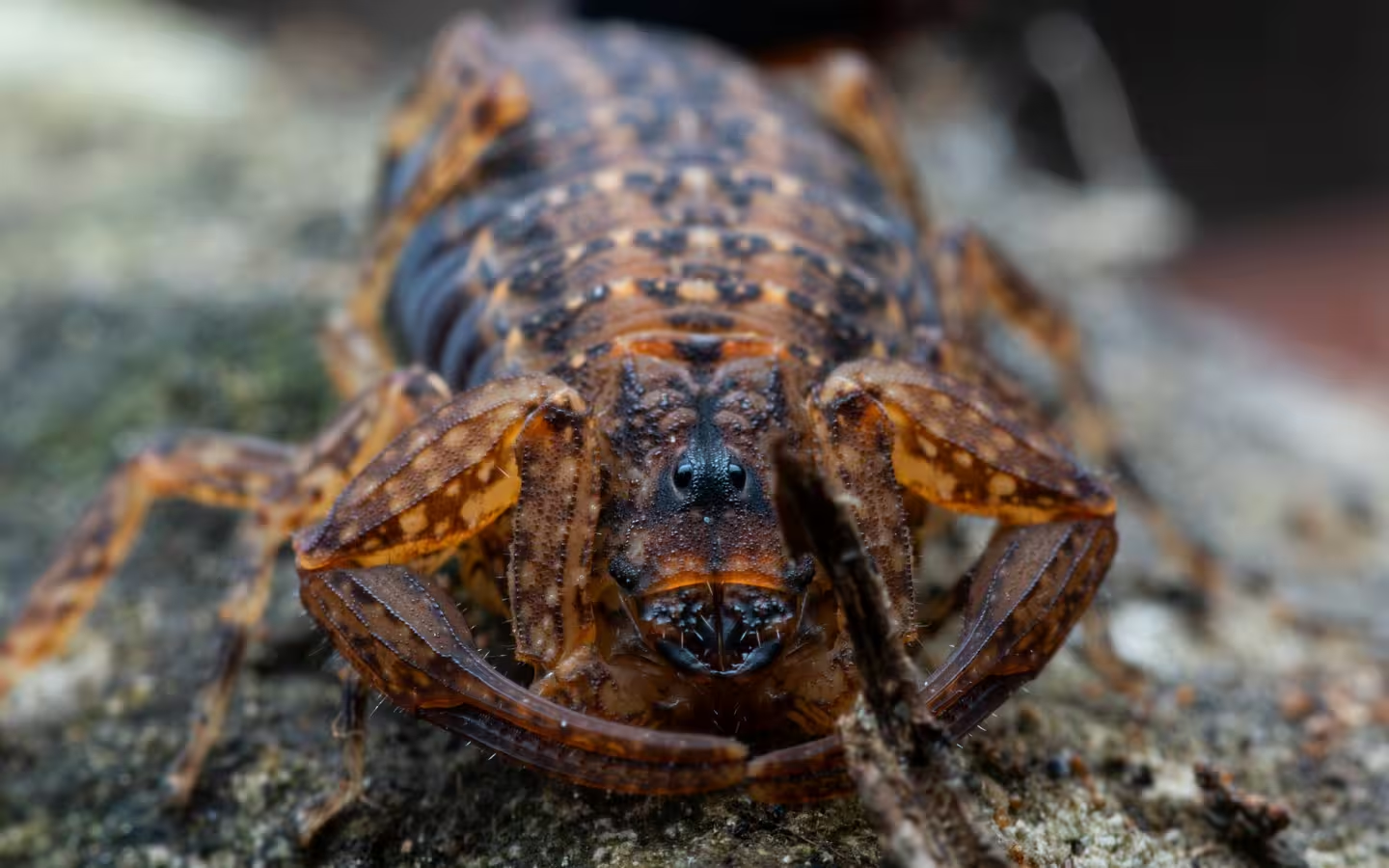
The targets were Cn2 from Mexico, Ts1 from Brazil, AaH I and AaH II from North Africa, and LqhIII from the Middle East. Anthropic said it aimed designs at the part of each toxin that attaches to sodium channels in nerve-cell membranes. Those channels help nerves fire. A minibinder is a small protein intended to attach tightly to another molecule; by occupying the toxin’s channel-binding region, a binder could in principle keep the toxin from attaching there instead. An attachment measured in a laboratory binding test, however, is different from stopping venom’s effects.
Treating a scorpion sting could eventually involve proteins directed at these toxins if binders that attach to them can also be developed into a treatment. Anthropic says existing antivenoms generally use antibodies obtained from immunised animals, can be expensive or scarce, and usually work against only a small number of neurotoxins. Its proposed minibinders remain at the binding-test stage.
Adaptyv Bio and Twist Bioscience, two contract research organisations, tested whether the 211 candidate proteins attached to their intended targets. Of the 17 that met the research team’s criteria, seven bound Cn2, four bound AaH I, four bound AaH II and two bound LqhIII, 36Kr reported. No candidate met the criteria for Ts1. The laboratory result therefore covers four of the five selected toxins, among the particular designs the team chose to test.
Cn2 binders and the multitoxin test
Anthropic also asked Claude to design proteins against groups of toxins, including one group spanning all five. The toxins have a similar overall protein shape but differ in their amino acid sequences, according to Anthropic. A binder able to attach to several could reduce the number of separate molecules needed in a proposed antivenom combination. None of the 17 verified binders met the criteria for binding more than one toxin, 36Kr reported.
Two Cn2 candidates, Cn2-B1 and Cn2-B2, had dissociation constants in the single-digit nanomolar range, 36Kr reported. A lower dissociation constant indicates tighter binding. Competitive binding experiments indicated that the candidates may attach at the same or neighbouring positions as LR, an antibody previously shown to neutralise Cn2 in mice. That result concerns where the new proteins may attach, rather than whether they share LR’s effect on the toxin.
Anthropic says it has not confirmed whether its binders neutralise scorpion venom in a cellular environment and does not claim to have produced an antivenom. The company says it is making all 211 tested designs and their data available.