Meta opened code for Muse Gadgets on 2 October, allowing developers to build hardware that connects to its Muse AI agent, The Verge reported. Meta has also made a device of its own, the Muse Home Link, intended to let the agent control compatible equipment on a home network. The code extends Muse beyond the devices Meta is building itself.
Key points
- Developers can use an ESP32 board or Raspberry Pi to connect Muse to displays, buttons and sensors.
- Meta is providing open-source firmware and a Linux SDK for the project.
- Meta manufactured 5,000 Muse Home Link devices and has opened a waitlist ahead of shipping in October.
Muse Gadgets connects boards to the agent
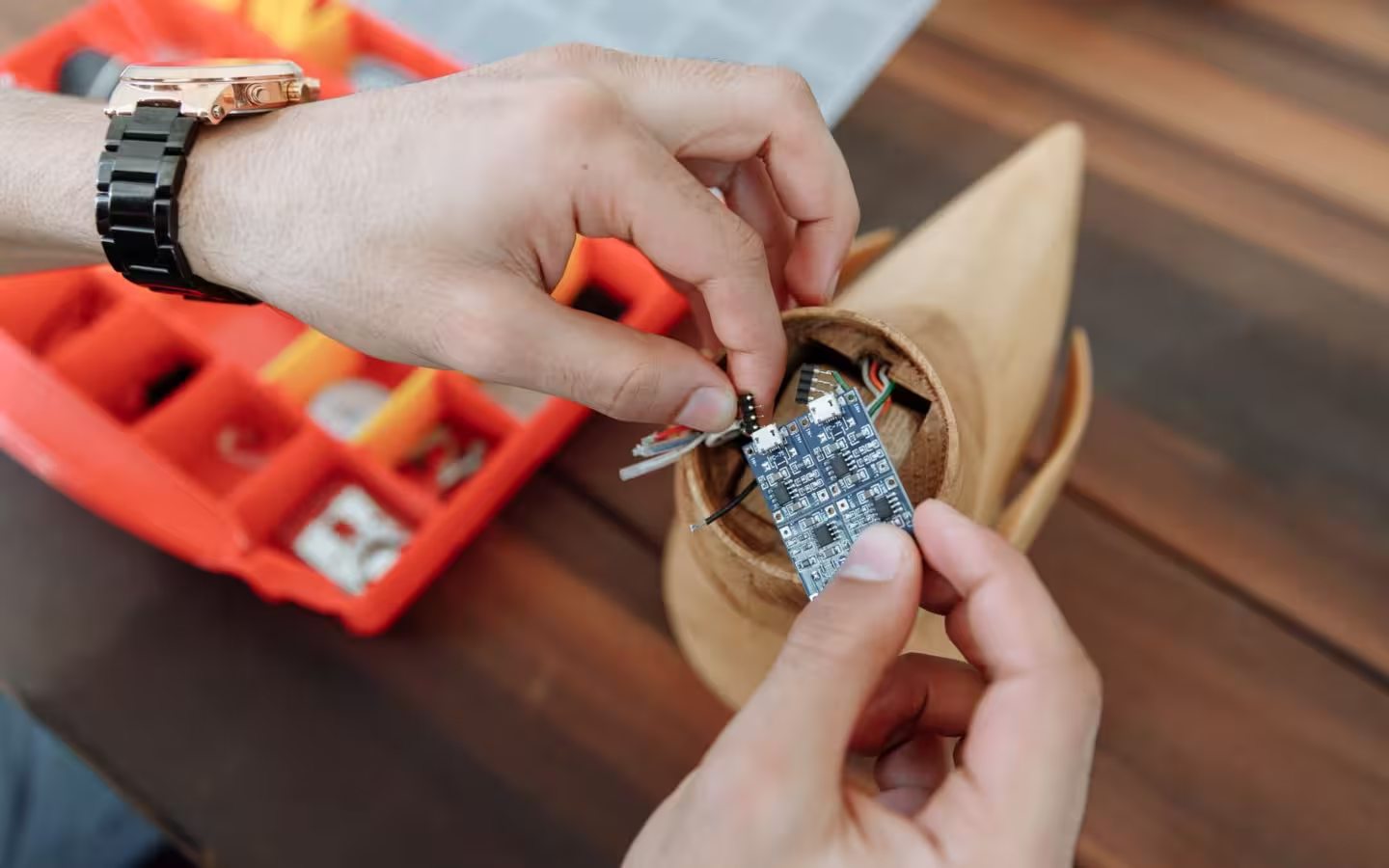
Meta describes Muse Gadgets as devices developers build themselves. Its instructions offer two starting points: program an off-the-shelf ESP32 board, or set up a Raspberry Pi with Meta’s software development kits. From there, developers can connect Muse to physical parts including displays, buttons, sensors and actuators — components that can receive input or carry out an action. Meta accompanies the invitation with the warning, “Proceed at your own risk!”, The Verge reported.
Nat Friedman, head of product for Meta’s superintelligence labs, said the company is providing open-source firmware and a Linux SDK, Engadget reported. Firmware is software that runs on a device’s hardware; an SDK supplies software components for building something that works with another system. Together, they give developers a route to put an interface for Muse on a board or computer and connect it to the parts around it. The board, screen and controls remain choices for whoever builds the gadget.
Checking a reminder could, under Meta’s suggested design, happen on a colour E Ink display connected to Muse rather than on the handheld Charm. Meta has also suggested an HDMI stick that would put Muse on a larger screen, and a small touchscreen device. Those are proposed projects for the released code, rather than a range of finished gadgets. The choice of display would change where an interaction takes place, while the agent it connects to would still be Muse.
Meta has also started a dedicated Discord community for Muse Gadgets, Engadget reported. For developers, the release provides more than a picture of what a Muse device might look like: it gives them firmware and software tools with which to assemble one. The range Meta describes runs from a single-purpose display to a device with buttons and sensors, each connected to the same agent through hardware chosen for that project.
Muse Charm gave Meta its own handheld
The open-source project follows Meta’s presentation of the Muse Charm at Connect on 23 September. Mark Zuckerberg showed the handheld device as a way to speak to a Muse agent without opening an app or unlocking a phone, CNBC reported. AI Affairs reported on the Charm’s unveiling at the conference. Muse Gadgets gives developers a way to try other physical forms for interacting with that agent.
The examples Meta has offered illustrate the difference. A colour E Ink panel would devote its screen to reminders, while an HDMI stick would use a larger display and a touchscreen project would put controls beside the image. Meta has specified boards and software for building such connections. The Charm, by contrast, is the handheld device Zuckerberg presented as Meta’s own hardware for speaking to Muse.
Meta has also taken Muse into business software. AI Affairs reported on Muse for Small Business and its links to business software. Muse Gadgets addresses a different connection: the physical surfaces and controls through which an instruction reaches the agent, or through which its response can appear.
5,000 Home Links connect to networks
Meta made a Muse gadget alongside the developer release. Friedman said the company manufactured 5,000 Muse Home Link units, each powered through USB-C. He described the device as a way for Muse to reach a home network and communicate with smart-home equipment, including televisions and speakers, that exposes HTTPS. HTTPS is the network protocol he identified for that connection: the Home Link provides a route from the agent to compatible equipment rather than putting a separate Muse gadget in every appliance.
Turning on a light or controlling a television could, with the Home Link and a suitable setup, become a request to Muse rather than an action taken at the device itself. Meta says community-built skills could also allow the agent to send a document to a printer. Which action would work would depend on the connected equipment and setup, as Meta’s examples make clear.
Meta is giving away the Home Link devices to Muse subscribers, Engadget reported. The finished gadget provides a different starting point from Muse Gadgets: it connects the agent to equipment already on a network, while the released firmware and SDK let developers choose the hardware that presents or receives an interaction. Meta has opened a waitlist for the Home Link, and plans to ship it sometime in October, The Verge reported.