Samsung Electronics will launch its first AI glasses in November, a company official confirmed to The Korea Herald on 1 October. Samsung is developing the Android XR-based Intelligent Eyewear with Google and eyewear partners Gentle Monster and Warby Parker. They enter a market in which Meta holds a substantial lead among glasses that have no visual display.
Key points
- Samsung’s glasses will send camera and microphone input through a connected Galaxy phone to Google’s Gemini, with replies delivered through speakers.
- Counterpoint Research put Meta’s share of display-less AI glasses at 94 percent in the first half of 2026.
- Samsung says recording lights will be visible inside and outside the frame, and the camera will stop working if the outside light is covered.
Intelligent Eyewear puts Gemini behind the lenses
Samsung showed the glasses with Google at Google I/O in May, then revealed more of their design and features at Galaxy Unpacked in London in July. The absence of a display shapes how the device works: its built-in camera and microphones gather what the wearer sees and hears, a connected Galaxy smartphone provides the route to Google’s Gemini, and the response comes through speakers in the glasses.
Checking a label while shopping could become a spoken exchange. The camera would capture what the glasses face, Gemini would process that information through the connected phone, and a response would come back as sound rather than text across the lenses. That possible use follows from the components Samsung has described, rather than from a reported test of label recognition.
For companies building on Android XR, that arrangement makes the phone connection and an audio response central to the experience. A service intended to deliver information through these glasses would have to work without assuming that it can put words or images in front of the wearer’s eyes. The partnership also puts Google’s Gemini in the processing path, while Gentle Monster and Warby Parker are Samsung’s named eyewear partners.
Samsung advertised the glasses at its July event as “lighter than most AI glasses”. The Korea Herald reported that local media had put its target at up to 5 grams below the 51-gram base Ray-Ban Meta model. Samsung has not disclosed a final weight, so the target remains separate from the specification of the device it intends to launch.
Meta holds 94 percent of display-less glasses
Global AI-glasses shipments rose 263 percent year on year in the first half of 2026, according to Counterpoint Research figures reported by The Korea Herald. Glasses without displays accounted for 96 percent of those shipments, and Meta held 94 percent of that display-less segment. The figures concern shipments during that period, rather than purchases or the number of glasses in use.
That distinction matters for Samsung’s entry. Its first model uses the design that accounted for nearly all shipments in Counterpoint’s figures, while Meta held nearly all of that segment. Samsung is therefore competing in the established part of the market, rather than relying on a built-in display to set its glasses apart.
There is growth outside that design, too. Display-equipped glasses accounted for the remaining 4 percent of shipments, while that smaller segment grew by nearly 450 percent year on year, 9to5Google reported on 22 September. Those figures give developers a reason to distinguish between software built for spoken replies and software that needs a lens display, rather than treating AI glasses as a single kind of screen.
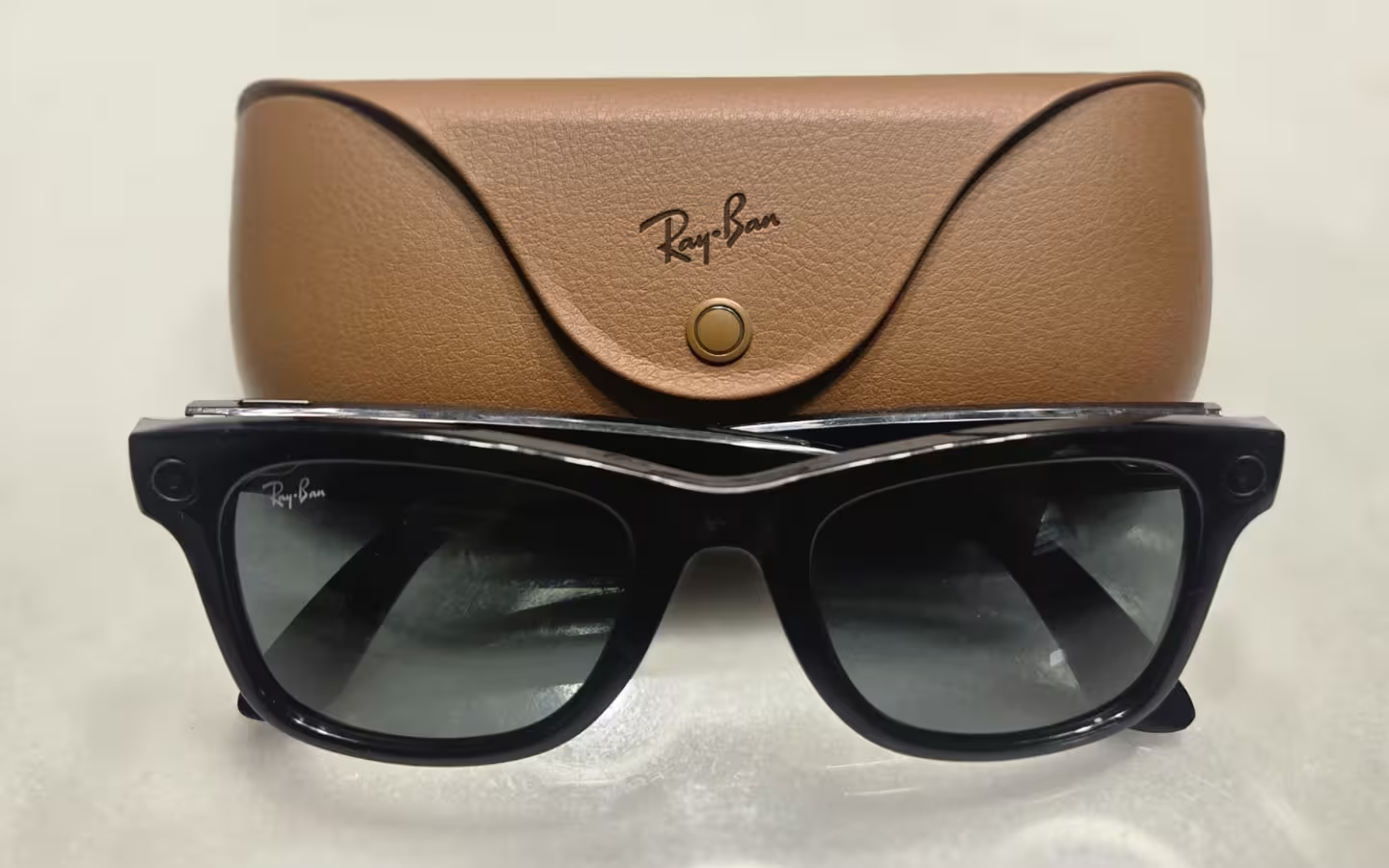
Meta expanded its own range on 23 September, upgrading its camera-equipped Ray-Ban Meta glasses and introducing a camera-free model, Ray-Ban Meta Audio. AI Affairs reported its camera-free launch. The new model offers audio and AI functions without a camera, giving the two companies different answers to a question raised by putting a recording device on someone’s face.
Samsung’s recording lights face a privacy test
Meta’s camera-equipped glasses have drawn criticism over covert recording after cases of people being filmed without consent attracted attention. Meta uses a visible light to signal recording and disables its camera when that indicator is covered. Removing the camera from Ray-Ban Meta Audio offers a different option, but Samsung’s first glasses will retain one.
The questions have reached Korean authorities before Samsung’s launch. The Personal Information Protection Commission reportedly met Samsung in late July to discuss how people nearby should be alerted when the glasses’ camera or microphones are active, The Korea Herald reported. The Ministry of Science and ICT began drafting guidelines for safer use in September amid concerns about covert filming and exam cheating.
Samsung says Intelligent Eyewear will have LEDs on both sides of the frame to indicate recording: one visible to the wearer and another visible from outside. The company says the camera will be disabled if the external indicator is obscured.