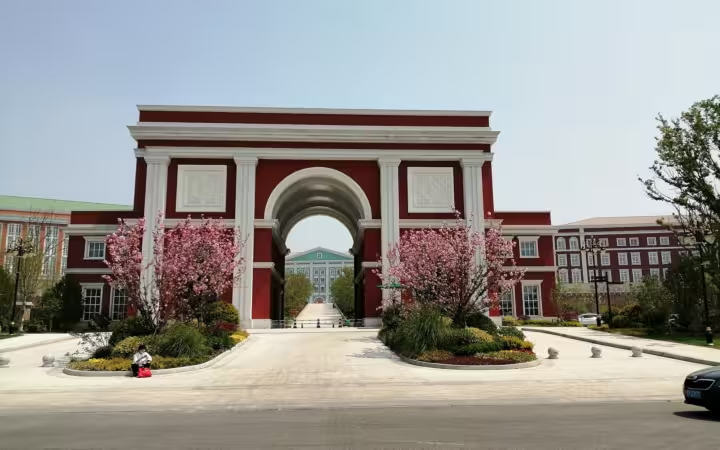
Moore Threads’ 2,112-GPU cluster in Wuxi reached 92.9% utilisation with 55 customers after entering commercial operation in October, Pandaily reported on 3 November. The Huishan computing centre in China uses the Beijing chipmaker’s MTT S5000 GPUs. Its first phase began trial operation in July, before opening for commercial service.
Key points
- The first phase has 264 servers carrying 2,112 MTT S5000 GPUs.
- Training makes up more than 62% of workloads; pure inference accounts for 23.1%.
- Operators put a DeepSeek V4 Flash inference test at 92% of an H800 setup under the same conditions. The figures have not been independently verified.
- Moore Threads reported 1.736 billion yuan in first-half 2026 revenue, up 147.42% from a year earlier.
Wuxi’s 264 servers enter commercial service
The operating phase comprises 264 servers divided into four modules of roughly 500 GPUs each. The centre is planned at the 10,000-card scale. Its first phase was activated in June, entered trial operation in July and began commercial service in October. The cluster was supplied as a ready-to-run installation and reached maximum operating capacity within three months of its activation.
Figures shared with Zhidx put utilisation at 92.9%, with 55 customers and 33 models onboarded during the trial period, Pandaily reported. Training accounts for more than 62% of workloads, while combined training and inference makes up 14.7% and pure inference 23.1%. The customer count and workload mix provide measures of activity beyond the number of installed cards.
The cluster supports more than 30 model families, including Qwen, GLM, DeepSeek, Kimi and MiniMax. Moore Threads’ S5000 GPUs have also been deployed in Beijing and Hangzhou. The company uses its MUSA software stack for applications running on its chips, alongside a tool for moving existing CUDA code to MUSA.
DeepSeek V4 Flash tested against H800
In a DeepSeek V4 Flash run with 7K input and 2K output tokens, a single machine generated 994.97 output tokens per second, with 1,241 tokens per second reported as the realised output rate. The system handled 48 concurrent requests within its service-level target. Cluster operators put its performance at 92% of an H800 setup under the same test conditions.
Those are operator-reported figures and have not been independently verified, Pandaily reported. The comparison concerns the specified inference test. Training, which represents more than 62% of the centre’s workloads, was measured separately in earlier claims by Moore Threads about a larger S5000-based cluster.
The Wuxi cluster also offers a configuration that divides the initial processing of a prompt from token generation across different accelerators. One arrangement combined three S5000 cards with two H20 cards. It delivered throughput described as comparable to nine H20 cards, or about 1.87 times the baseline, while reducing the time to the first token by roughly half.
Moore Threads’ revenue reaches 1.736 billion yuan
Moore Threads’ first-half 2026 revenue totalled 1.736 billion yuan, 147.42% higher than a year before and more than its revenue throughout 2025, Startup Fortune reported on 28 October. Gross profit was 989 million yuan, up 103.78%, while net losses attributable to shareholders narrowed by 95.73%.
The company recorded a first-quarter net profit of 29.4 million yuan, compared with a 112.5 million yuan loss a year earlier. Research and development spending rose 38.16% to 769 million yuan in the first half, according to the same report. Moore Threads listed on Shanghai’s STAR Market on 5 December 2025, raising nearly 8 billion yuan.
Moore Threads credits demand for its GPUs and a faster rollout of its Kuae computing clusters for the increase in revenue. The company says it developed MUSA independently of Nvidia’s CUDA. It also supplies MUSIFY, a tool designed to port existing CUDA code to MUSA, Startup Fortune reported.
Neolix demand approaches 10,000 cards
Autonomous delivery vehicle maker Neolix has plans to train its self-driving models at Huishan, with demand approaching the 10,000-card level — about five times the current cluster’s card count. Moore Threads has previously said an S5000-based cluster at that scale delivers 10 EFLOPS of compute, with 90% effective training time and 95% linear scaling efficiency.
The Huishan centre’s expansion is planned in phases. Moore Threads is also working with JD Cloud towards a 100,000-card cluster.