Samsung SDI publicly displayed a cylindrical lithium iron phosphate (LFP) battery for AI data centres for the first time on 29 September, alongside three other product zones at Data Centre World Asia in Singapore, Business Korea reported.
Key points
- At its first appearance at the exhibition, Samsung SDI is displaying backup batteries and prismatic LFP batteries intended for its integrated SBB 2.0 storage system.
- The company says its uninterruptible power supply solution met the criteria in a large-scale indoor fire test by UL Solutions.
- Second-quarter revenue was 3.7688 trillion won, up 18.5% year on year, while operating profit reached 203.8 billion won.
Four Samsung SDI zones in Singapore
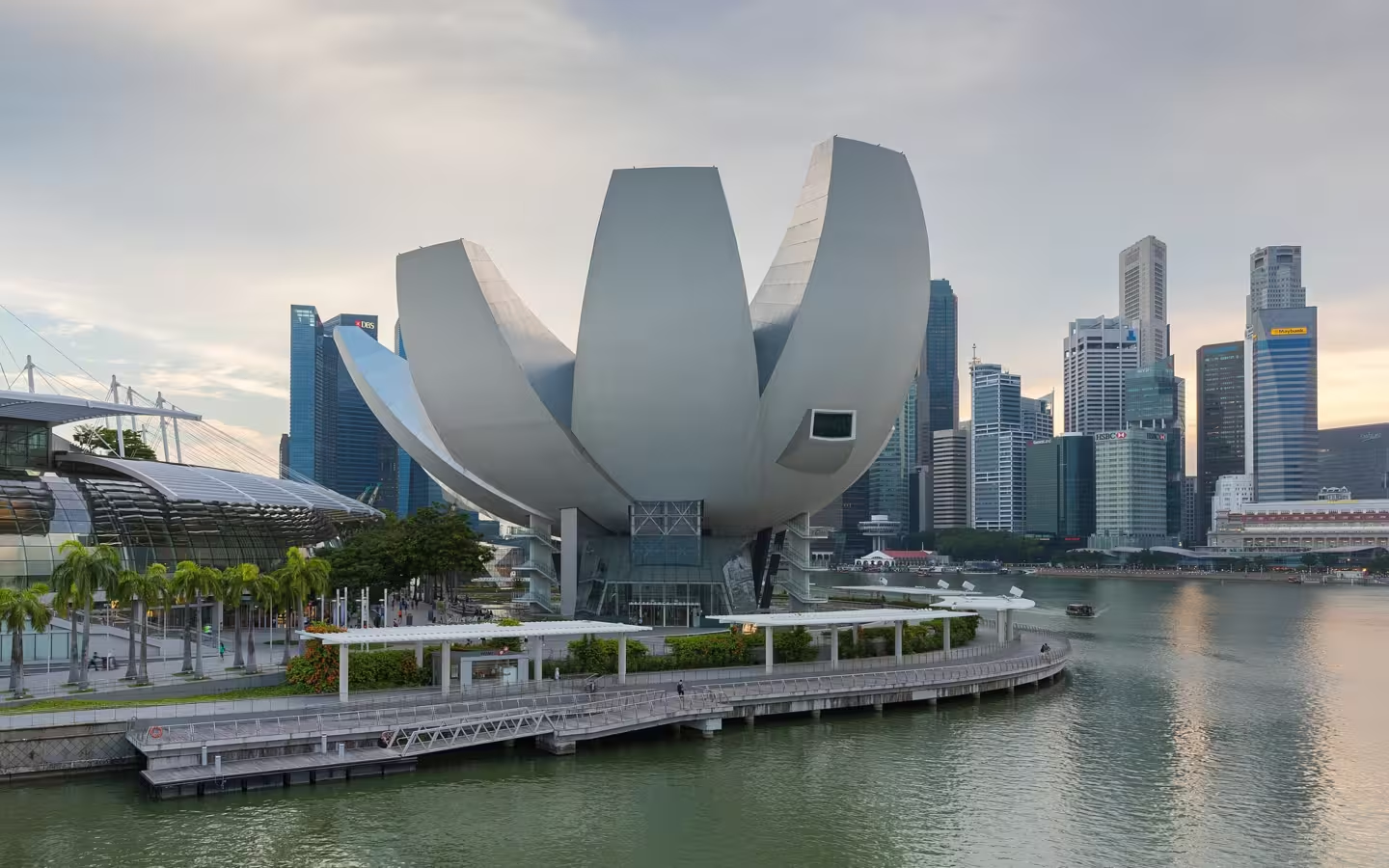
Data Centre World Asia opened on 29 September at Marina Bay Sands, Yonhap News Agency reported. Data Centre World Asia is scheduled to close on 30 September. Samsung SDI is taking part for the first time, according to the Korea Times. More than 600 companies are attending the event.
The four areas of Samsung SDI’s display cover uninterruptible power supply (UPS), battery backup units (BBUs), Samsung Battery Box (SBB) and battery cells. The cylindrical LFP battery sits in the BBU range, which the company is presenting for emergency power supply in AI data centres.
Samsung SDI says its structural design raises the cylindrical LFP cell’s power output and capacity while improving fire safety. That positions the new cell alongside another BBU product at the exhibition: a high-output, high-capacity 21700 cylindrical ternary battery with a bottom vent that the company says improves safety.
The cell display gives Samsung SDI a way to present batteries for backup units separately from its larger energy storage offering. Both appear at the same exhibition, but the cylindrical LFP cell is being shown in the BBU area, while the prismatic LFP battery is in the SBB area.
Samsung SDI displays UL-tested UPS solution
Samsung SDI says its UPS solution was the first in the world to meet every criterion in a large-scale indoor fire test run by UL Solutions, the Korea Times reported. The test involves deliberately setting fire to a battery energy storage installation to assess its safety.
Business Korea reported that the test assesses explosion risk and the spread of heat from one battery to another. The company is displaying the UPS solution in its own exhibition zone, separate from the newly introduced cylindrical LFP battery in the BBU zone.
In the SBB zone, Samsung SDI is displaying prismatic LFP batteries intended for SBB 2.0. The company’s integrated energy storage product combines batteries, power conversion systems and other components in one unit for large-scale storage. Samsung SDI says the prismatic design and LFP chemistry improve performance and safety.
Samsung SDI is presenting prismatic LFP batteries intended for its integrated SBB 2.0 storage system, alongside battery cells, backup units and a UPS solution. A Samsung SDI representative said the company would continue introducing solutions for differing customer needs, drawing on battery technologies with improved performance and safety.
Second-quarter profit and rival battery plans
Samsung SDI reported second-quarter revenue of 3.7688 trillion won, an increase of 18.5% from a year earlier, and operating profit of 203.8 billion won. The quarter marked its first return to profitability in seven quarters, Business Korea reported.
Business Korea attributed part of the earnings recovery to rising demand for energy storage systems associated with AI data centre investment. It also identified a rebound in the European electric vehicle market as a contributor. The Singapore display brings the company’s data centre battery range before customers after that recovery.
Other battery makers are pursuing data centre demand. AI Affairs previously reported that Panasonic Energy is targeting $5.5bn in data centre battery sales. The target is a sales figure, while Samsung SDI’s Singapore announcement concerns products on display.
AI Affairs also reported that LG Energy Solution’s battery storage qualified as Nvidia DSX Ready for AI factories.