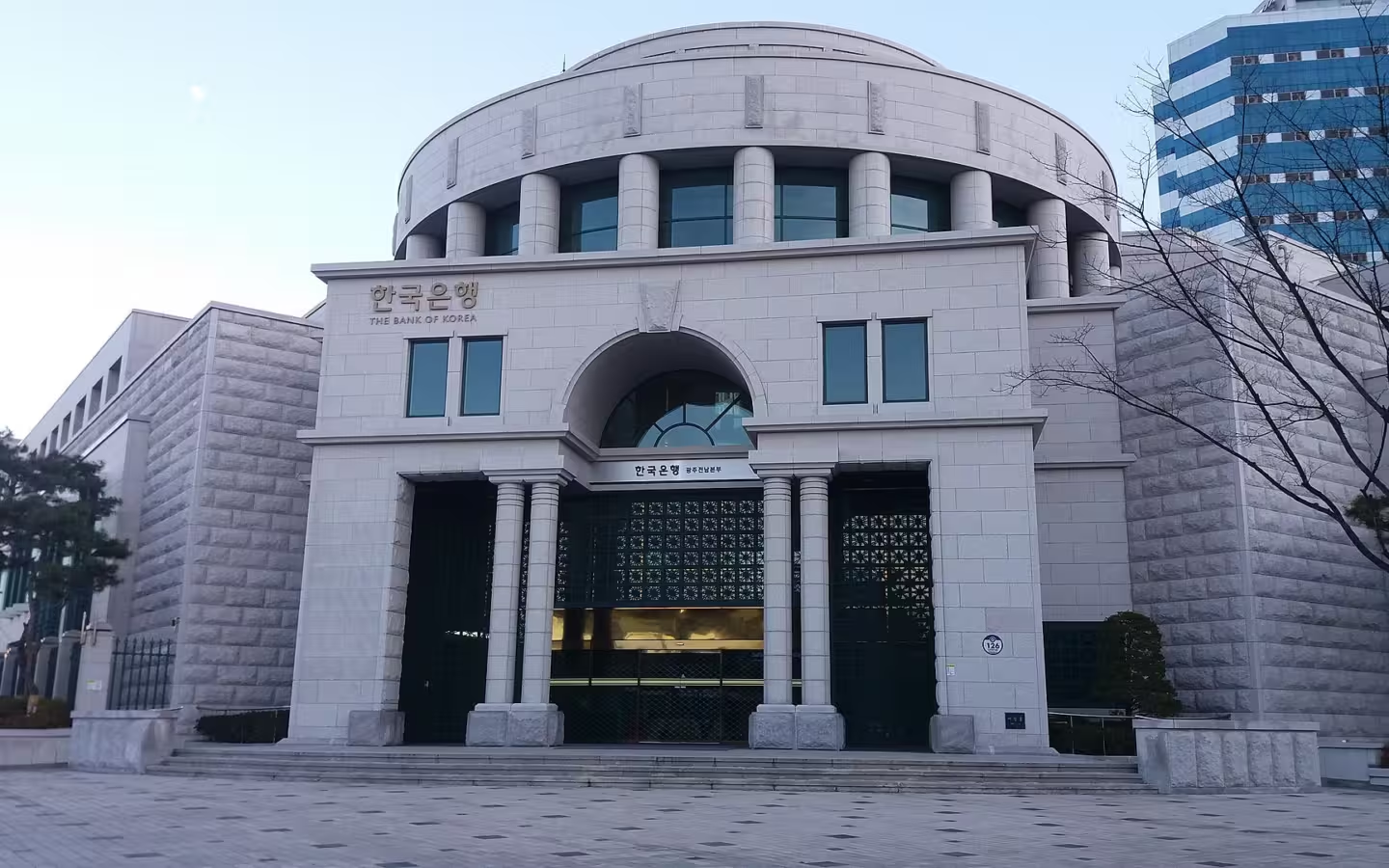
South Korea’s semiconductor exports could fall $50 billion to $100 billion short of earlier forecasts in 2027 if major US technology companies slow AI investment, the Bank of Korea said in written responses to lawmaker Ahn Do-geol, Reuters reported from Seoul on 27 October. Under the bank’s pessimistic scenario, the shortfall would reduce the country’s GDP growth rate by approximately 0.4 percentage points.
Key points
- The bank modelled an export shortfall of $50 billion to $100 billion if US technology groups slow AI infrastructure spending.
- Its scenario would put the 2027 current account surplus well below an initial $430 billion projection.
- Combined capital expenditure by five US technology groups is projected to reach $110 billion in 2027, up from an estimated $80 billion in 2026.
The $600 billion chip export forecast
The bank submitted its answers to the National Assembly on 26 October, Pulse reported. Its initial semiconductor export forecast was $600 billion. At the upper end of the modelled shortfall, exports would miss that forecast by as much as one-sixth, according to Pulse.
The bank’s scenario assumed a 10 per cent decline in Korean semiconductor unit prices, Reuters reported. Pulse described chip prices as falling about 10 per cent short of expectations. It also reported that the scenario reduced projected semiconductor export growth from a low- to mid-teens rate to around 10 per cent.
The modelled export loss would push South Korea’s current account surplus well below the bank’s initial projection of $430 billion for 2027. Semiconductors account for roughly half the country’s exports. Pulse reported that the bank also expected weaker chip exports and slower growth under the scenario to put downward pressure on the won.
The estimates put figures on a downside scenario in the bank’s August economic outlook for the first time. They concern a possible slowdown in spending by customers of the chip industry, rather than a reduction in export orders already recorded.
Five US groups’ spending could reach $110 billion
Amazon, Google, Microsoft, Meta and Oracle are the five US technology companies in the bank’s assessment. Their combined capital expenditure rose from $40 billion in 2025 to an estimated $80 billion in 2026 and is projected to reach $110 billion in 2027. The bank’s export scenario rests on the risk that spending on AI infrastructure slows instead.
The projected increase in those companies’ spending sits alongside the bank’s warning about chip demand. The Bank of Korea cautioned that substantial uncertainty remained over both AI demand and the wider memory-chip business cycle, Reuters reported. Its export figures are conditional estimates for a pessimistic case.
Bank of Korea’s earlier growth outlook
On 22 October, the Bank of Korea held its benchmark interest rate at 3 per cent after increases in July and August, Korea JoongAng Daily reported. At that meeting, the bank expected growth in 2026 and 2027 to be significantly stronger than its August projections of 3.3 per cent and 2.9 per cent, citing semiconductor exports and growth in exports outside information technology.
Governor Shin Hyun-song said at the 22 October meeting that growth and inflation pressures were stronger than the bank had anticipated in August. The later export exercise addressed a different outcome: weaker spending by the US technology companies whose infrastructure plans underpin demand for Korean chips.
Kim Sang-bong, an economics professor at Hansung University, said contract volumes were secured through the first half of 2027, Pulse reported. He said prices could fall after that if Chinese production of commodity chips expands or data-centre investment slows, substantially affecting the current account surplus.