Chinese embodied AI developers raised 93.5 billion yuan ($13 billion) across 322 deals in the first half of 2026, five times the year-earlier amount, according to ITjuzi data reported on 2 November by Retail News Asia. The data research firm’s figures cover Chinese embodied AI developers. Investment is shifting from mechanical hardware towards the software models that direct autonomous machines.
Key points
- X Square, Galaxea and Spirit AI each have private valuations of roughly $3 billion, based on company disclosures.
- Ant Group’s Robbyant tested its software on 20 robot configurations from 17 equipment brands.
- CATL reported an insertion success rate above 99 per cent for Spirit AI machines on a wire-assembly task at its Zhongzhou plant.
X Square, Galaxea and Spirit AI near $3 billion
Robot makers are cutting prices for bipedal frames and robotic arms to gain market share. Retail News Asia reported that those cuts are squeezing manufacturing margins and directing investment towards software intended to handle physical work without separate engineering for every task. Supply-chain operators are testing subscriptions that could run across fleets containing different machines, rather than paying vendors to customise each installation.
Company disclosures put the private valuations of software developers X Square, Galaxea and Spirit AI at roughly $3 billion each, Retail News Asia reported. The figures concern companies developing the models that direct robots, rather than the frames and arms on which those models run. Hong Kong-listed UBTech, meanwhile, advertised a package worth up to 124 million yuan ($18 million), including equity and benefits, for a chief scientist to join its AI model team.
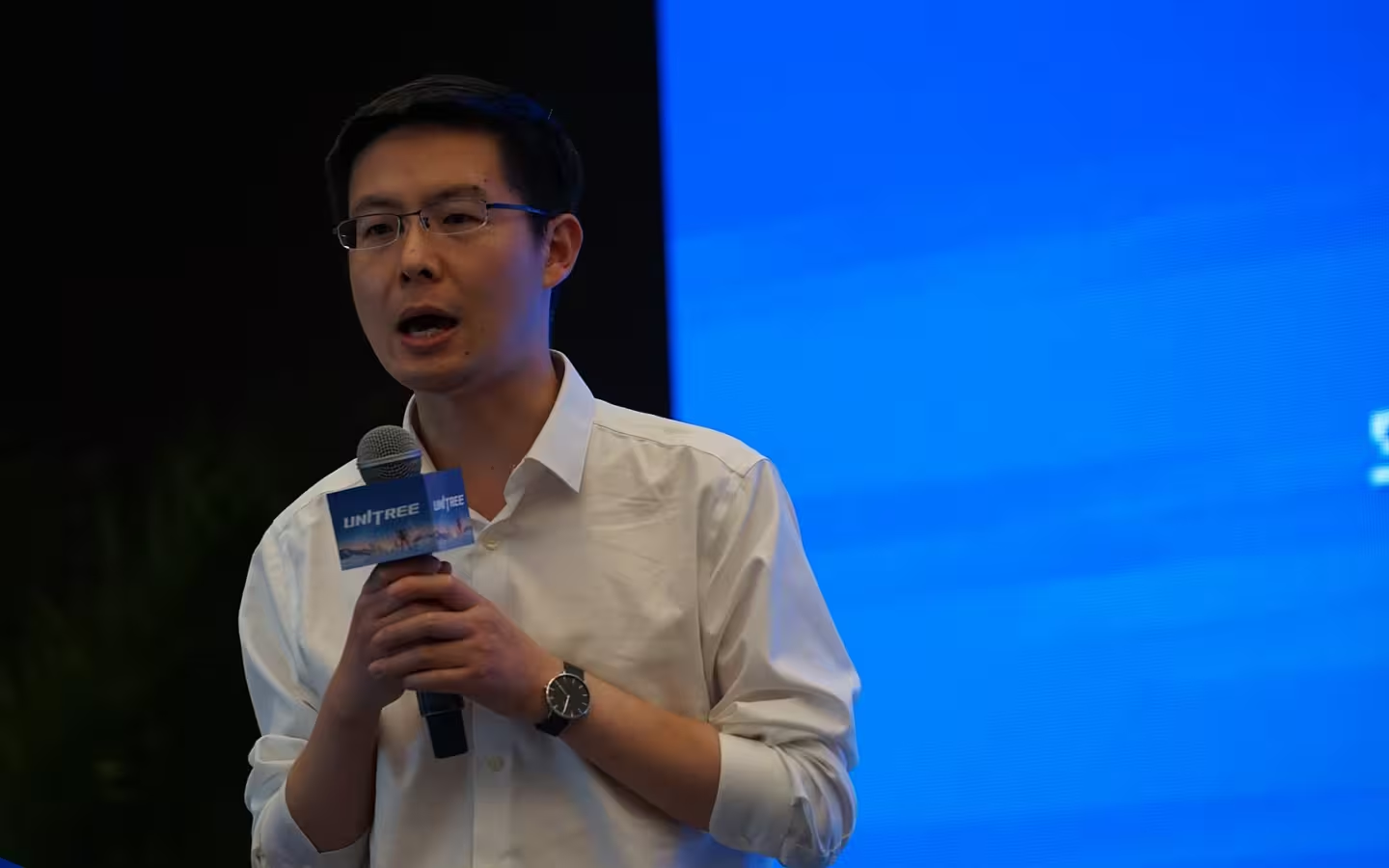
Unitree has assembled a team of roughly 30 researchers working on spatial physics and predicting how objects behave. Its founder, Wang Xingxing, has set a target for robots to complete 80 per cent of assignments in 80 per cent of unfamiliar retail and factory settings when given direct voice instructions. The target concerns performance in places the machines have not previously encountered.
Robbyant tests software across 17 equipment brands
Developers are collecting different kinds of physical-action data to train those models. Spirit AI hired roughly 1,000 people to record everyday manual work and industrial activities, according to co-founder Gao Yang. ACE Robotics used wearable sensors on shop and hotel staff to capture grip force and hand movements during their shifts.
Robbyant, Ant Group’s robotics unit, used 160,000 hours of operating material to train its model. That included 50,000 hours of movements guided by people. It tested the software on 20 robot configurations made by 17 equipment brands, an attempt to make one control system work across different designs. Robbyant also put robots in two Shanghai pharmacies to select and arrange prescriptions, with pharmacists inspecting the items before dispatch.
Other developers are relying on simulated work. DexForce uses computer-generated environments to prepare robotic arms for specified precision tasks within six to eight hours and reports success rates above 99.9 per cent on those assignments. Manycore Tech cautions that simulations struggle to reproduce small changes in friction, the way materials deform and variations in warehouse lighting.
United States export controls on advanced Nvidia processors restrict access to computing clusters used to train large vision-language-action models, which connect visual input and instructions to physical movement. Chinese startups are using synthetic data, smaller models produced through pruning and domestic Huawei processors to work around that constraint. China operated more than 70 embodied AI training grounds, with a dataset standard due on 1 November, AI Affairs reported.
CATL reports above 99 per cent at Zhongzhou
Battery manufacturer CATL has integrated Spirit AI machines into its Zhongzhou production facility for flexible wire assembly during battery-pack testing. CATL reported an insertion success rate above 99 per cent on that line, Retail News Asia reported. The measured result concerns that particular assembly task at Zhongzhou.