Intel shares fell more than 4% in premarket trading on 5 October as Elon Musk confirmed discussions with TSMC about his planned Terafab chip venture, while TSMC shares rose about 3% in Taiwan, MarketWatch reported. The talks concern a potential manufacturing partner for a Texas project that Intel had already offered to support.
Key points
- Intel was down 4.26% at $114.27 in premarket trading on 5 October.
- Musk described the TSMC contact as discussions, with no partnership announced.
- Reported possibilities range from TSMC owning the plant to SpaceX taking majority ownership.
- Intel has been linked to Terafab through its 1.4nm-class 14A process.
Intel’s 14A role faces a potential rival
Intel shares were down 4.26% at $114.27 at 6:14 a.m. ET on 5 October, Breaking the News reported. TSMC shares were also up about 1% in US premarket trading, according to MarketWatch. The moves followed Musk’s acknowledgement of contact with a company that could manufacture chips for the same venture Intel had backed.
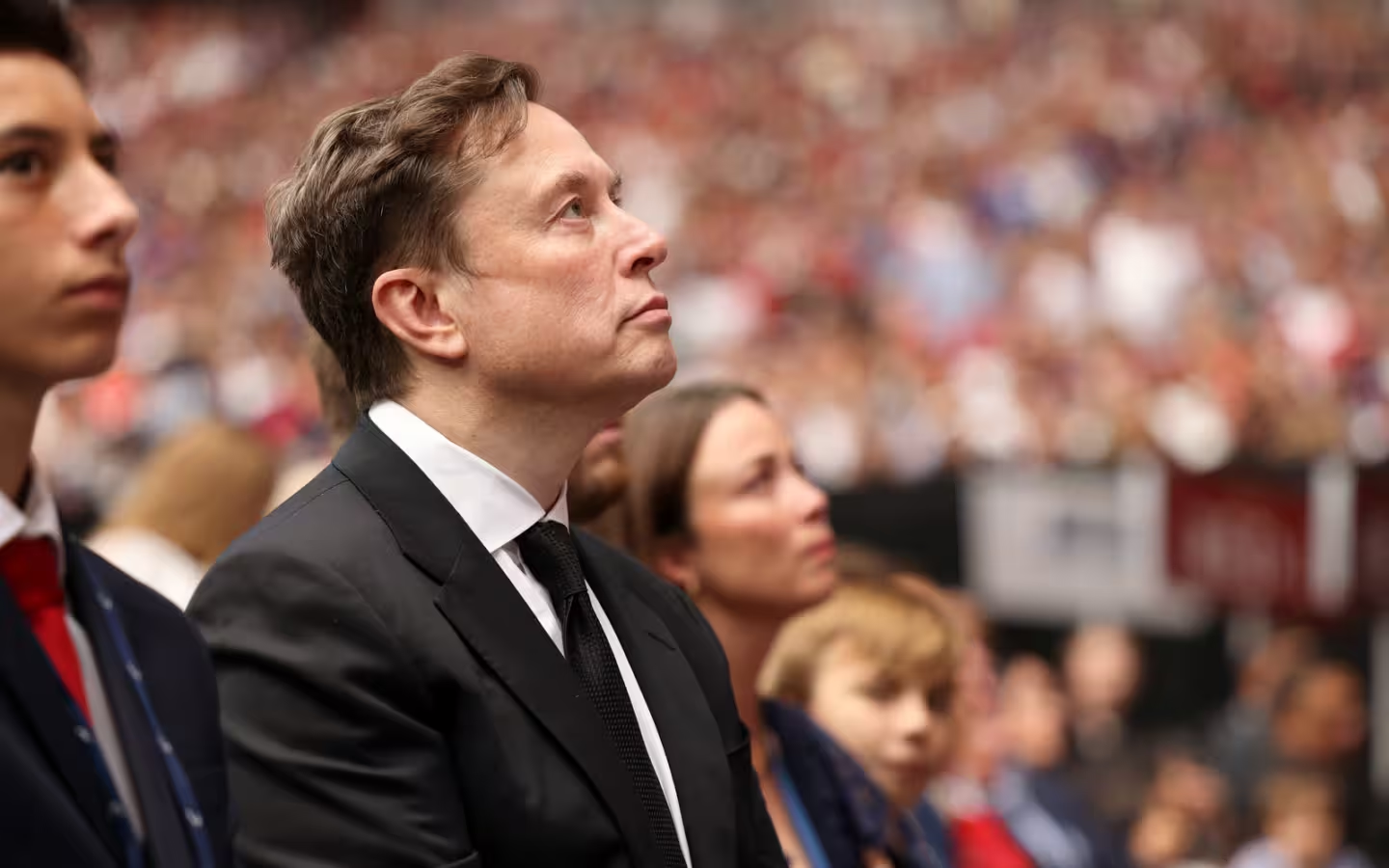
Musk wrote on X on 3 October: “Just discussions, but something may come of it,” Tom’s Hardware reported. The proposed Terafab facility would supply Tesla, SpaceX and xAI exclusively. Intel became the first company to offer support for the Texas-based project in April, according to MarketWatch.
Intel was to provide its 1.4nm-class 14A process technology for Terafab, Tom’s Hardware reported. The publication said Intel’s process could be displaced if TSMC joined the project and supplied its own technology. It also raised another possibility: Terafab could make chips using Intel’s process and turn to TSMC for advanced packaging.
Those possibilities put different parts of Intel’s prospective role at stake. TSMC’s involvement as a manufacturer using its own process would compete with the technology Intel was expected to supply. A packaging role alongside Intel’s process would leave room for both companies in the project.
TSMC and SpaceX consider plant structures
One potential structure would give TSMC ownership and operation of the proposed plant. SpaceX or Terafab could invest, commit to buying a guaranteed volume of chips, or do both, Tom’s Hardware reported, citing Tim Culpan’s Culpium newsletter. A purchase commitment would place part of the demand risk with Musk’s companies, while an equity stake would also commit their capital.
Another possibility would give SpaceX majority ownership, with TSMC contributing less capital while providing manufacturing technology and operational expertise. Tom’s Hardware characterised both structures as speculation rather than agreed options. Musk’s statement confirmed discussions, not a choice between the ownership arrangements described in the report.
The TSMC-owned proposal resembles the company’s JASM and ESMC ventures in Japan and Germany, where local partners supply capital and demand while TSMC operates the plants and contributes its technology, according to Tom’s Hardware. SpaceX majority ownership would be a different arrangement for TSMC. The distinction determines which party would control the facility and bear more of its investment cost.
The Texas discussion also sits alongside TSMC’s wider US expansion plans. Market reports suggest the company is considering a second US manufacturing hub around Dallas, potentially involving six advanced wafer plants, TrendForce reported. AI Affairs previously reported on TSMC weighing a Texas campus beyond its $265 billion Arizona commitment.
TSMC’s $265 billion Arizona commitment
TSMC’s planned Arizona investment stands at $265 billion after an additional $100 billion commitment, TrendForce reported. The company has raised its 2026 capital spending guidance to $60 billion–$64 billion and expects its spending over the next three years to significantly exceed that of the preceding three-year period.
For Intel, the manufacturing timetable extends beyond the market’s immediate reaction. TrendForce reported that Intel’s official roadmap places internal products using 14A in the second half of 2027 and high-volume manufacturing in 2028. Commercial Times reported that pilot production of TSMC’s A14 process at Baoshan in Hsinchu could begin as early as the first quarter of 2027.
TSMC expects third-quarter revenue of $44.6 billion–$45.8 billion and a gross margin of 65%–67%. TSMC will hold its earnings call on 15 October.