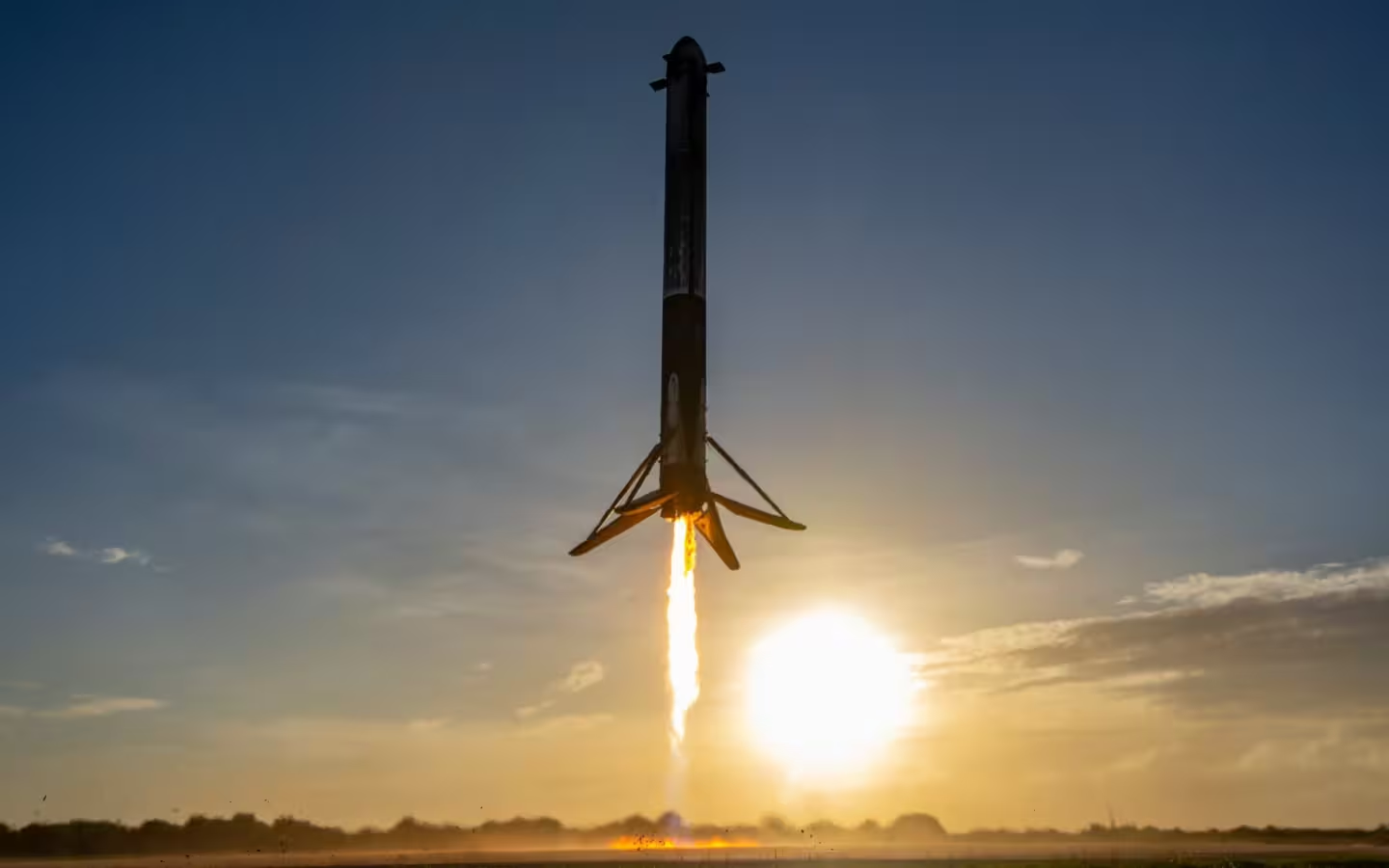
26 October 2026 — In a 25 October post on X, Elon Musk said SpaceX had closed $40 billion in debt financing for graphics processing units, Reuters reported. Musk, SpaceX’s chief executive, said revenue from its Starlink satellite internet and launch businesses had helped preserve the company’s access to credit.
Key points
- Musk said the debt would primarily fund GPUs due in the first and second quarters of 2027.
- He said lenders had almost entirely stopped providing money to AI data centre companies without substantial revenue from other businesses.
- Musk predicted failures and consolidation among more than 200 neoclouds, a group of companies that rent out GPU capacity.
- Seeking Alpha said the extent of the lending shutdown Musk described had not been independently established.
SpaceX debt finances 2027 GPU deliveries
Musk said the financing was primarily callable debt for GPUs expected in the first and second quarters of 2027, Seeking Alpha reported. Callable debt can be repaid before maturity under specified conditions. Musk said the purchases would not be a major factor in the quarter in which he posted his comments.
SpaceX had been in talks with banks and asset managers to raise $40 billion to buy Nvidia AI chips, Reuters reported earlier in October. Musk’s subsequent account described financing that had closed. He attributed SpaceX’s access to its investment-grade standing as well as revenue from Starlink and launches.
SpaceX is also pursuing a much larger computing build-out. AI Affairs previously reported its target of 13 GW of AI capacity by 2027 and a UBS estimate that the project would cost $350 billion. Those figures concern capacity and estimated spending, while Musk’s latest figure concerns debt for GPUs.
Musk warns more than 200 neoclouds
Musk said debt markets had almost entirely stopped lending to companies without substantial revenue outside AI data centres. He predicted failures and consolidation among the more than 200 neoclouds he cited. Neoclouds rent specialised GPU computing capacity to AI developers and other customers, and many have used borrowed money to acquire hardware.
Seeking Alpha said the extent of the credit-market shutdown Musk described had not been independently established. His prediction concerned what could happen to neocloud operators, rather than a count of companies that had already failed. The distinction matters for a sector in which access to borrowing can determine whether an operator proceeds with equipment purchases and expansion.
Financing conditions vary among operators. AI Affairs reported a $3.5 billion Citi facility for Nebius’s data centre expansion. It also reported that CoreWeave’s 2032 bond yield topped 15% as its credit swaps reached a record. Neither development is a count of neocloud failures.
Bond issuance reaches $194 billion
Large technology companies have continued to borrow for AI investment. Seeking Alpha reported that a Reuters analysis of LSEG data put bond issuance by Amazon, Alphabet, Meta Platforms and Oracle at approximately $194 billion through 7 July. The analysis put their issuance during all of 2025 at $108 billion and described the increase as 79%.
Goldman Sachs projected that borrowing by those four companies and Microsoft could reach $250 billion in 2026 and $400 billion in 2027. In June, Morgan Stanley forecast that AI-related debt sales worldwide would near $570 billion in 2026, more than twice the 2025 amount. Its capital spending projections for Alphabet, Amazon, Microsoft and Meta were $700 billion in 2026 and more than $1 trillion in 2027.
S&P Global warned on 19 October that major technology companies might have AI-related financial obligations beyond their reported debt. The credit rating agency pointed to financing arrangements involving data centre developers and smaller AI companies. S&P downgraded Oracle to BBB- in July, its lowest investment-grade rating, amid concerns about AI spending and uncertain returns.