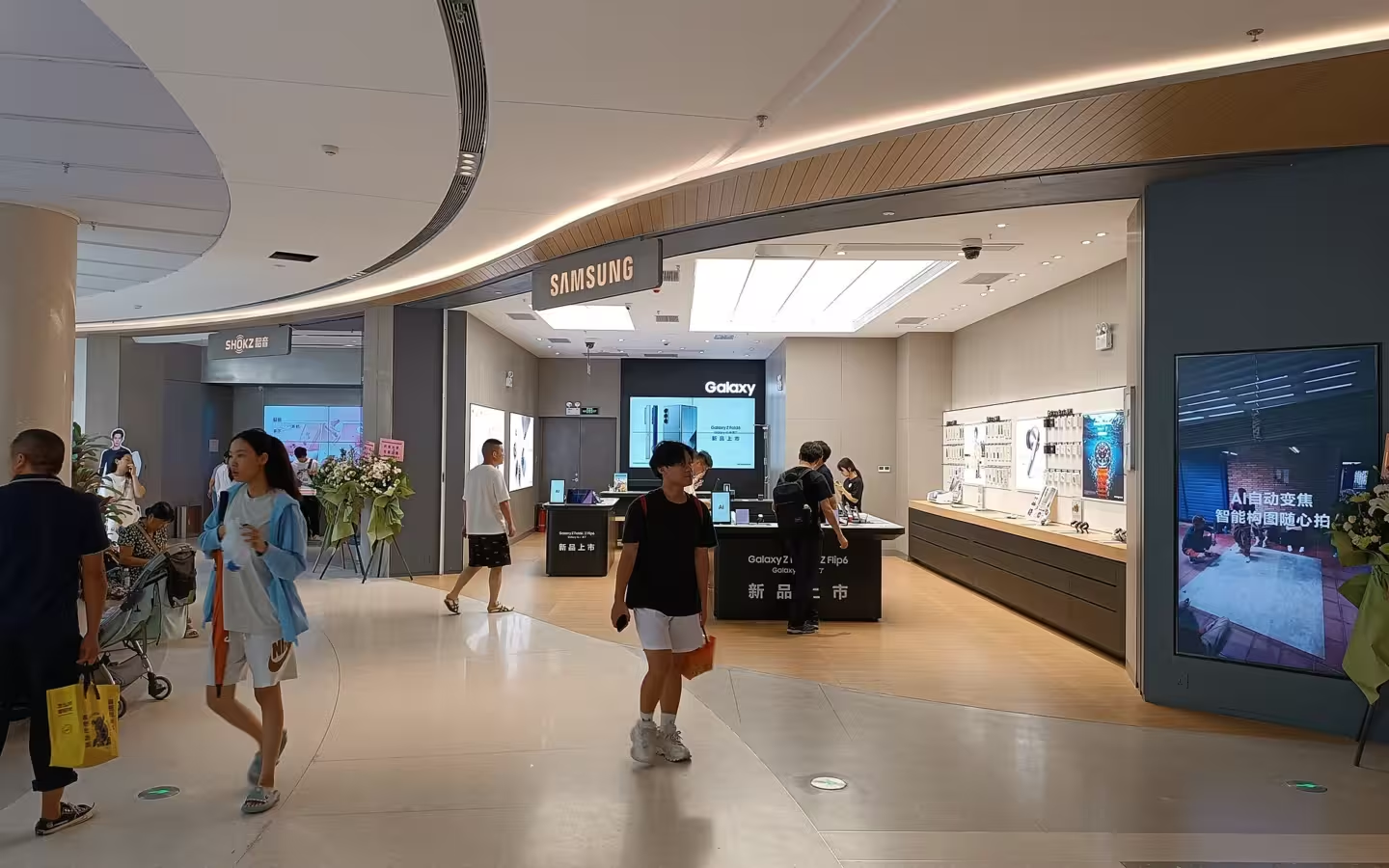
Samsung Electronics reported 107.44 trillion won ($80.5 billion) in third-quarter operating profit on 29 October, up 783.1 percent from a year earlier, The Korea Herald reported, citing the company’s full earnings filing in South Korea. The result was slightly below the 107.66 trillion won LSEG SmartEstimate reported by CNBC. Samsung had projected 107.4 trillion won in preliminary guidance on 8 October, before reporting the full result and approving a cash dividend.
Key points
- Revenue reached 195.25 trillion won, up 126.9 percent from a year earlier.
- Net profit rose 514.6 percent to 75.14 trillion won.
- Samsung’s board approved a 30 trillion won cash dividend, payable on 27 November.
- Samsung committed $500 million to a $1 billion investment alongside five affiliates in Helix Digital Infrastructure.
Samsung’s profit and the analyst estimate
The filing put third-quarter revenue at 195.25 trillion won, up 126.9 percent year on year. Net profit rose 514.6 percent to 75.14 trillion won. Against the previous quarter, revenue increased 13.9 percent and operating profit rose 20.1 percent.
Samsung became the first South Korean company to exceed 100 trillion won in quarterly operating profit, The Korea Herald reported. Its October profit projection had put the year-on-year increase at about 783 percent. The full filing placed the increase at 783.1 percent.
CNBC reported an LSEG SmartEstimate of 195.79 trillion won for revenue, against Samsung’s 195.25 trillion won result. The estimate weights forecasts towards analysts with a stronger record of accuracy. Operating profit was also slightly below that measure’s forecast, even as both reported figures rose sharply from a year earlier.
Reuters put operating profit at 107.4 trillion won ($80.04 billion), against the 107.44 trillion won ($80.5 billion) reported by The Korea Herald. Reuters said Samsung expected the chip supply shortage to deepen next year.
Memory prices and SK Hynix earnings
Demand for memory used in AI systems and higher chip prices have supported Samsung’s earnings. High-bandwidth memory, or HBM, stacks memory chips to move data rapidly, while conventional DRAM supplies servers as well as other devices. Samsung and SK Hynix are expanding supplies of HBM4 for Nvidia’s next-generation Vera Rubin AI accelerator, Korea JoongAng Daily reported.
Market researcher TrendForce projected a 13 percent to 18 percent rise in contract prices for general-purpose DRAM in the third quarter from the previous quarter, according to Korea JoongAng Daily. It expected a further 10 percent to 15 percent increase in the fourth quarter. Chipmakers’ focus on AI memory has left less production capacity for conventional DRAM, the publication reported.
SK Hynix, Samsung’s memory-chip rival, reported record quarterly earnings on 28 October. AI Affairs reported its 83.33 trillion won third-quarter profit and plans for further shareholder returns. Both companies face the cost of adding manufacturing capacity. Securities firms estimated that Samsung’s foundry business, which makes chips for other companies, lost about 1 trillion won in the quarter, Korea JoongAng Daily reported.
Shin Jung-ho, head of research at LS Securities, said chipmakers’ investment costs were rising alongside demand. Returns on that spending and the cash the companies generate would matter as much as further revenue growth, he said.
Samsung’s dividend and Helix commitment
Samsung’s board approved a 30 trillion won cash dividend in a separate filing on 29 October. The payment forms part of a 90 trillion won to 110 trillion won shareholder-return plan announced in August. Reuters put the third-quarter dividend at 4,601 won per share.
Samsung Electronics and five affiliates also announced a combined $1 billion investment in KKR-backed Helix Digital Infrastructure during the third quarter, CNBC reported. Samsung Electronics committed $500 million, with the affiliates providing the rest. The commitment places a separate demand on group capital alongside chip manufacturing investment and the approved cash return.
Samsung announced a partnership with French AI startup Mistral AI to use its technology in semiconductor operations, including chip design and manufacturing, according to CNBC. Samsung also led Mistral’s Series D funding round. The partnership concerns Samsung’s own chip operations, while the Helix commitment directs capital to digital infrastructure.
Samsung will pay the 30 trillion won dividend on 27 November.