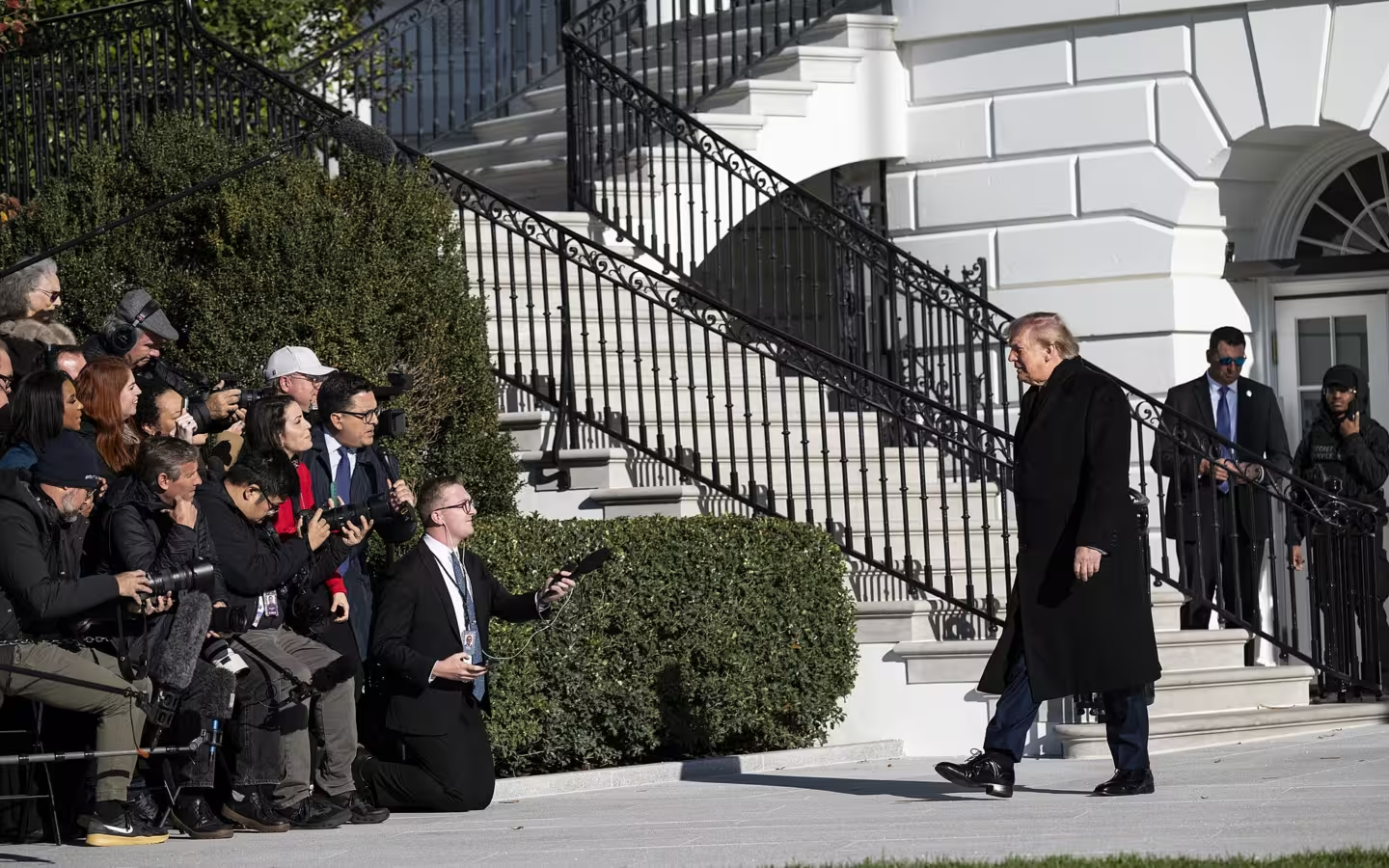
US President Donald Trump opposed international regulation of what he called super intelligence at the Asia-Pacific Economic Cooperation (APEC) leaders’ plenary in Shenzhen, China, on 19 November, even as he urged caution over its risks, Yonhap News Agency reported. His remarks set out Washington’s position to Pacific partners at a meeting where other participants had called for common approaches to AI.
Key points
- Trump opposed what he called “globalist regulation” of super intelligence at the APEC leaders’ plenary in Shenzhen on 19 November.
- He said the technology had harmful elements that required careful management.
- Trump had earlier signalled openness to AI safeguards, while Russia sought common AI implementation rules for the region.
- He anticipated a planned meeting with the presidents of China and Russia later on 19 November.
Trump draws a line at global regulation
Trump described super intelligence, or SI, as the greatest technological transformation since the industrial revolution and spoke of its potential to increase economic growth. “It’s super intelligence, but we have to watch it. We have to be careful. We have to cherish it,” he said. He offered a favourable assessment of the technology alongside a warning: “It’s almost completely good, but it’s got some bad elements, and we have to be very careful in managing those bad elements.”
His objection was stated in terms of who would regulate SI and what that regulation might do to its development. “We oppose any form of globalist regulation or anything to control or stifle SI, and we won’t allow that to happen,” Trump said. The same speech paired an insistence on managing harmful elements with opposition to international controls that he regarded as restrictive.
That position differs from a refusal to consider safeguards at all. AI Affairs previously reported that Trump had signalled openness to AI guardrails. At APEC, he directed his opposition at global regulation and at controls he said would stifle SI.
Competing approaches at Shenzhen
Other participants at the Shenzhen meeting were advancing different priorities. Russia sought common AI implementation rules for the region, as AI Affairs reported.
The summit also brought an industry warning about the economics of deployment. Baidu chief Robin Li warned that AI adoption was failing to raise profits at most companies, according to AI Affairs’ coverage of his APEC remarks. Trump’s case for nurturing SI rested in part on its potential contribution to growth. Li’s warning concerned the returns companies were seeing from adoption, rather than the possibility of future gains.
A separate US-China proposal concerned communication during serious AI incidents. Before the summit, TVC News reported that Trump and Chinese President Xi Jinping were expected to discuss a proposed technology crisis hotline. Trump and Xi reached an understanding in September to set up the hotline, with talks on its specifics anticipated at the November summit. The proposed channel would give officials a way to contact each other in an emergency involving AI.
TVC News described the hotline talks as expected ahead of the summit. Trump’s reported plenary remarks dealt instead with caution, growth and his opposition to controls on SI.
A planned meeting with Xi and Putin
Trump also reaffirmed a US commitment to stability and prosperity in the Asia-Pacific region during the plenary. He expressed anticipation about a planned trilateral summit with Xi and Russian President Vladimir Putin later on 19 November. That meeting would bring together the leaders of the US and China, whose governments TVC News expected to discuss an AI crisis channel, and Russia, which had sought common regional implementation rules.