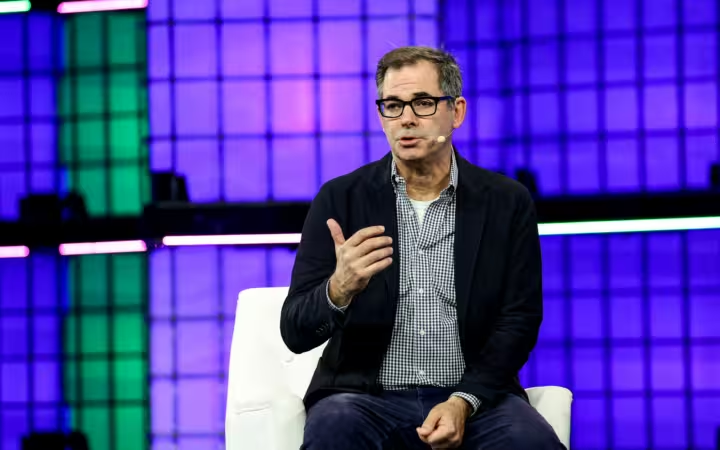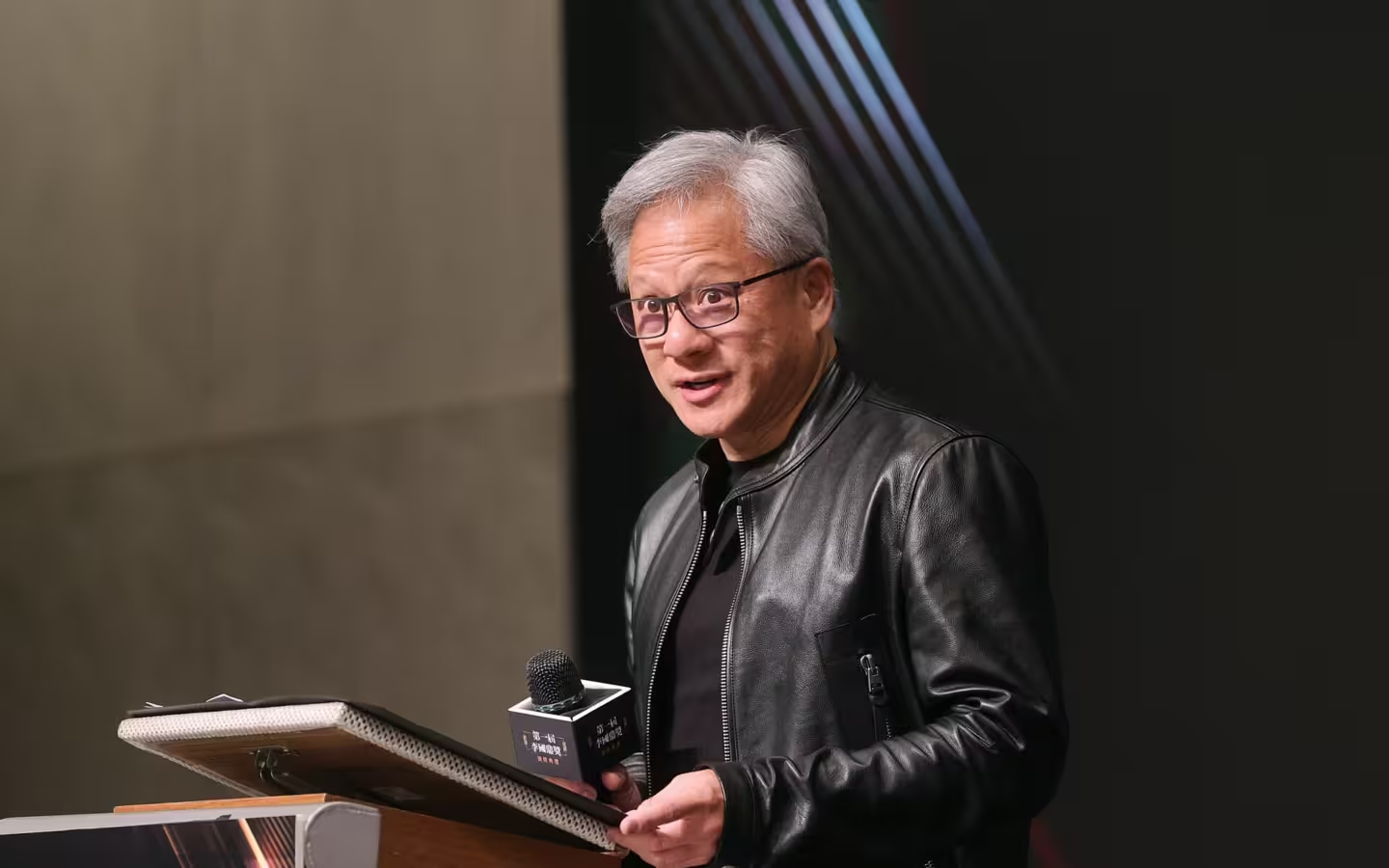
Nvidia chief executive Jensen Huang said at an event in Berlin that turmoil in AI stocks would pass, Bloomberg reported on 17 October. The Philadelphia Stock Exchange Semiconductor Index had fallen for eight straight days, its longest losing streak since 2008.
Key points
- Huang expects returns from substantial AI hardware investment to ease investors’ concerns.
- Nvidia shares fell in seven of the previous eight trading sessions.
- CoreWeave shares lost a quarter of their value during the week, while its bonds reached levels typically associated with distress.
Huang points to returns on AI hardware
Huang made his remarks to Bloomberg’s Emily Chang at an event in Berlin. “All of this is going to pass, and the reason for that is very simple,” he said. He predicted that AI would affect industries and countries positively, describing the technology as being at the beginning of its development.
His reassurance rests on a longer-term expectation about spending. Huang expects returns from large investments in hardware eventually to ease the concerns weighing on AI stocks. He has repeatedly urged investors to put immediate developments in the context of AI’s longer-term worth.
Huang acknowledged the unsettled flow of news during the interview, but said it would not alter the industry’s fundamentals. “Stay focused on first principles,” he said. “Stay focused on the fundamentals.”
Nvidia is the biggest seller of AI accelerators, the chips used to develop and run models. Its business also extends into related hardware, software and services. The company’s position puts it at the centre of the infrastructure spending whose eventual returns Huang expects to reassure investors.
Germany has also planned an AI cooperation deal with Nvidia involving hundreds of millions of euros, according to earlier AI Affairs reporting on the proposed arrangement.
Chip index records eight-day losing streak
The Philadelphia Stock Exchange Semiconductor Index’s eight-day decline was its longest run of losses since 2008. Nvidia shares declined in seven of the previous eight sessions, placing the company’s own stock among those caught in the sell-off.
Shares of chipmakers and AI infrastructure companies had a difficult week. Investors have expressed concern about whether spending on AI can be sustained while borrowing costs are higher. Huang’s view is that the returns on hardware investment will ultimately ease that concern.
His comments addressed the market’s near-term anxiety with a prediction about the technology’s broader economic effects. “It’s going to impact in a very positive way every single industry and every single country,” he told Chang. That is Huang’s forecast, set against the declines in chip and infrastructure stocks.
CoreWeave bonds reach distress-associated levels
CoreWeave, a cloud-computing services provider, has been hit particularly hard in the sell-off. Nvidia is one of its biggest backers, linking the two companies in the build-out of AI infrastructure even as their shares face different degrees of pressure.
CoreWeave’s bonds reached levels typically associated with distress, Bloomberg reported. The move brought the pressure on AI infrastructure companies into the debt market as investors questioned the sustainability of spending at higher borrowing costs.
The company’s stock lost a quarter of its value during the week.